



Smith Helmets and Goggles: How to Choose

A helmet and goggles are chosen together. If they do not fit each other, a bare strip of forehead is left between them and the goggles fog up. Here we explain what MIPS, Koroyd, ChromaPop and S2 on a Smith label mean, how to take a size and which lens is for which weather.
All the models we mention are in stock in the shop at the time of writing. A helmet and goggles have to fit each other, and that is checked by trying them on, not from a photo.
MIPS and Koroyd: what is inside the helmet
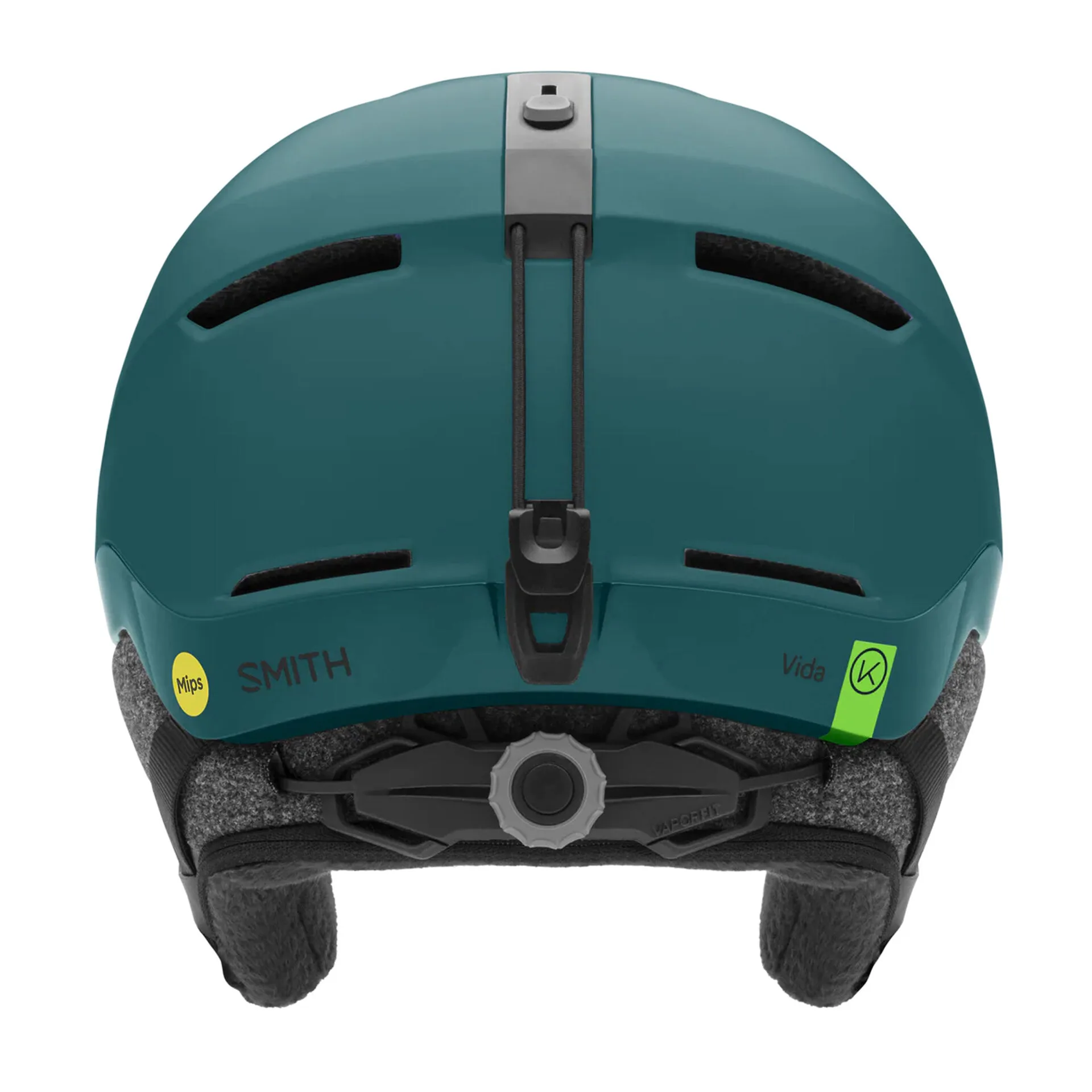
Almost all the Smith helmets we carry right now come with MIPS. MIPS is a thin inner layer that lets the helmet rotate slightly relative to the head in an angled impact. The aim is to reduce the rotational forces that reach the head. When you fall on snow, the impact is almost never straight from above, so this makes sense.
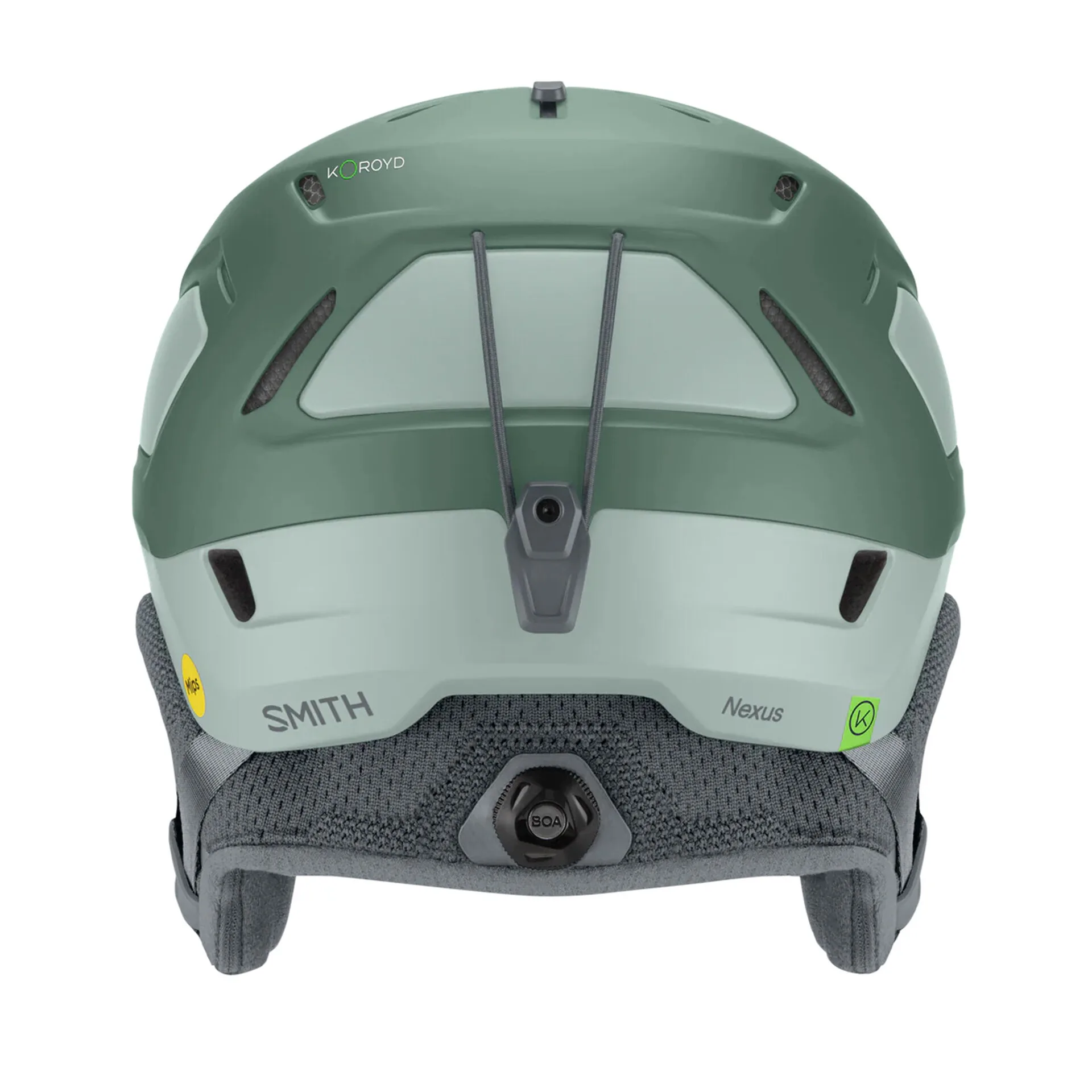
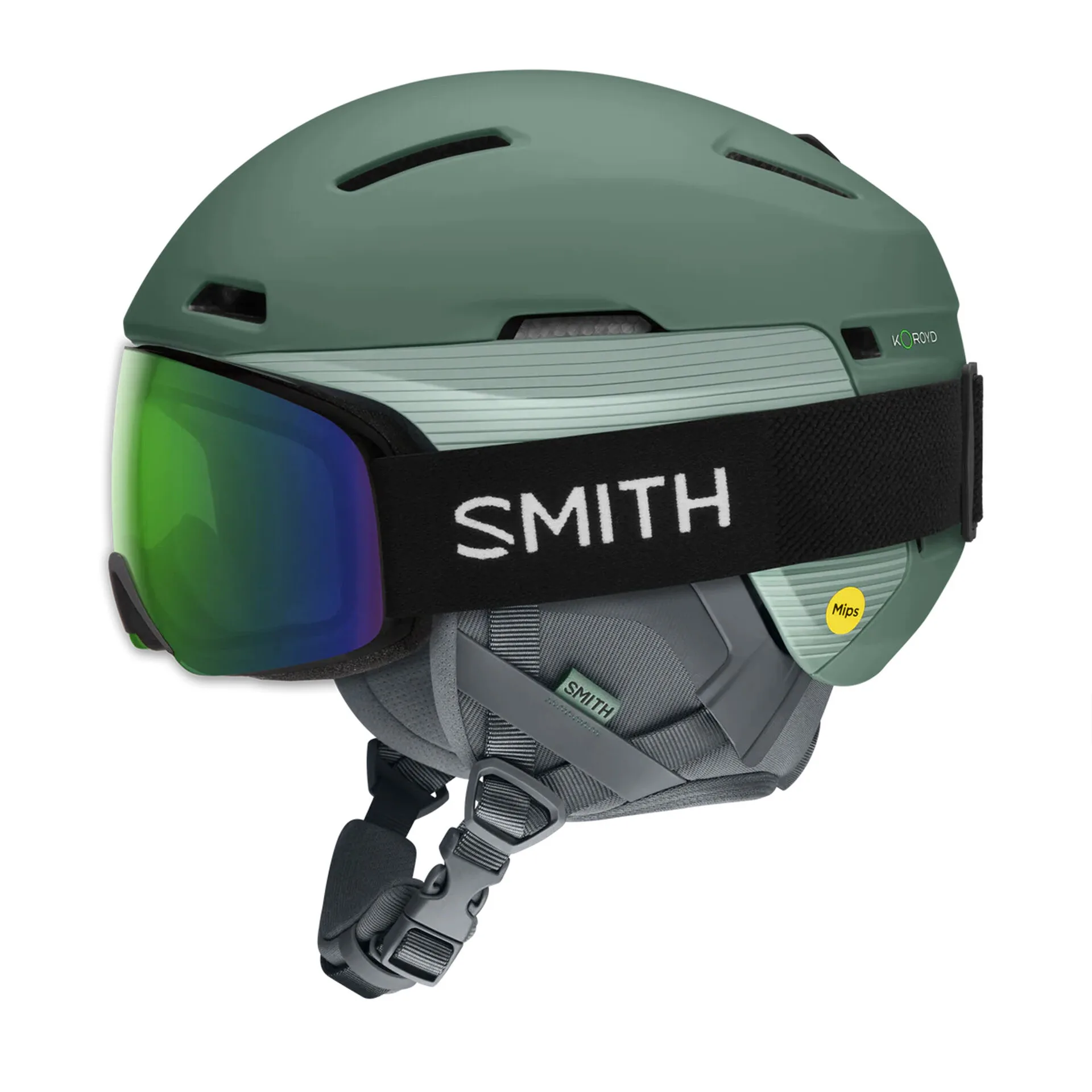
Koroyd is a structure of thin tubes that crush on impact and absorb energy. The tubes are open, so they let air through and the helmet is no warmer. Smith uses it in two ways. On the Smith Method Pro MIPS and the Smith Accel MIPS it is Zonal Koroyd, only in the zones around the forehead, back and top of the head. On the Smith Nexus MIPS Koroyd covers the whole helmet.
All models are certified to ASTM F2040 and CE EN 1077:2007 Class B. A helmet is built to take one serious impact. After such a hit you replace it, even if nothing shows on the outside.
Shell and fit system
With In-Mold construction the outer shell and the foam are fused into one. The helmet is lighter: the Method Pro MIPS is about 400 g in size M. The Smith Rodeo MIPS has an Advanced ABS shell, harder on the outside and more relaxed about everyday knocks on the lift and in the trunk. The Smith Scout MIPS has Bombshell, a hard shell that is also worn in the park.
The fit system is the other thing you feel on your head. The Nexus has BOA 360, a dial at the back that tightens evenly around the whole circumference. The Method Pro and Accel have a dial with fine adjustment. The Smith Method MIPS and the Scout MIPS use Lifestyle Fit: no dial, the interior adjusts to the head by itself. It is simpler and works well if your head matches the size exactly.
The Method Pro and Nexus have a Fidlock magnetic buckle under the chin. It opens with one hand, with a glove on. The Accel and Nexus have vents that you open and close while riding. When it is -15 on the lift and +5 at lunch, you will use them.
Helmet size
Smith sizes run like this: S is 51-55 cm, M is 55-59 cm, L is 59-63 cm, XL is 63-67 cm. You measure the circumference with a tape measure, about 2 cm above the eyebrows, across the widest part of the back of the head. If you are on the border, try both sizes.
The right helmet sits snugly but does not squeeze. Loosen the fit system, put it on and shake your head. If the helmet moves separately from the skin of your forehead, it is too big. If after five minutes it presses in one spot, the shape is not yours: try another model, not a bigger size. A thin cap can be worn under the Method MIPS, but a thick knit hat does not go under a helmet.
For women we have the Smith Vida MIPS, with Koroyd panels, MIPS and vents that adjust on the move.
The lens: categories S0-S4
The category tells you how much light the lens lets through. That percentage is written as VLT. The less it lets through, the darker the lens and the stronger the sun it is meant for.
| Category | Light transmission (VLT) | Weather |
|---|---|---|
| S0 | 80-100% | Night riding, very low light |
| S1 | 43-80% | Overcast, fog, snowfall |
| S2 | 18-43% | Changeable weather, from cloud to moderate sun |
| S3 | 8-18% | Clear and sunny |
| S4 | 3-8% | Very strong sun, glacier, high mountains |
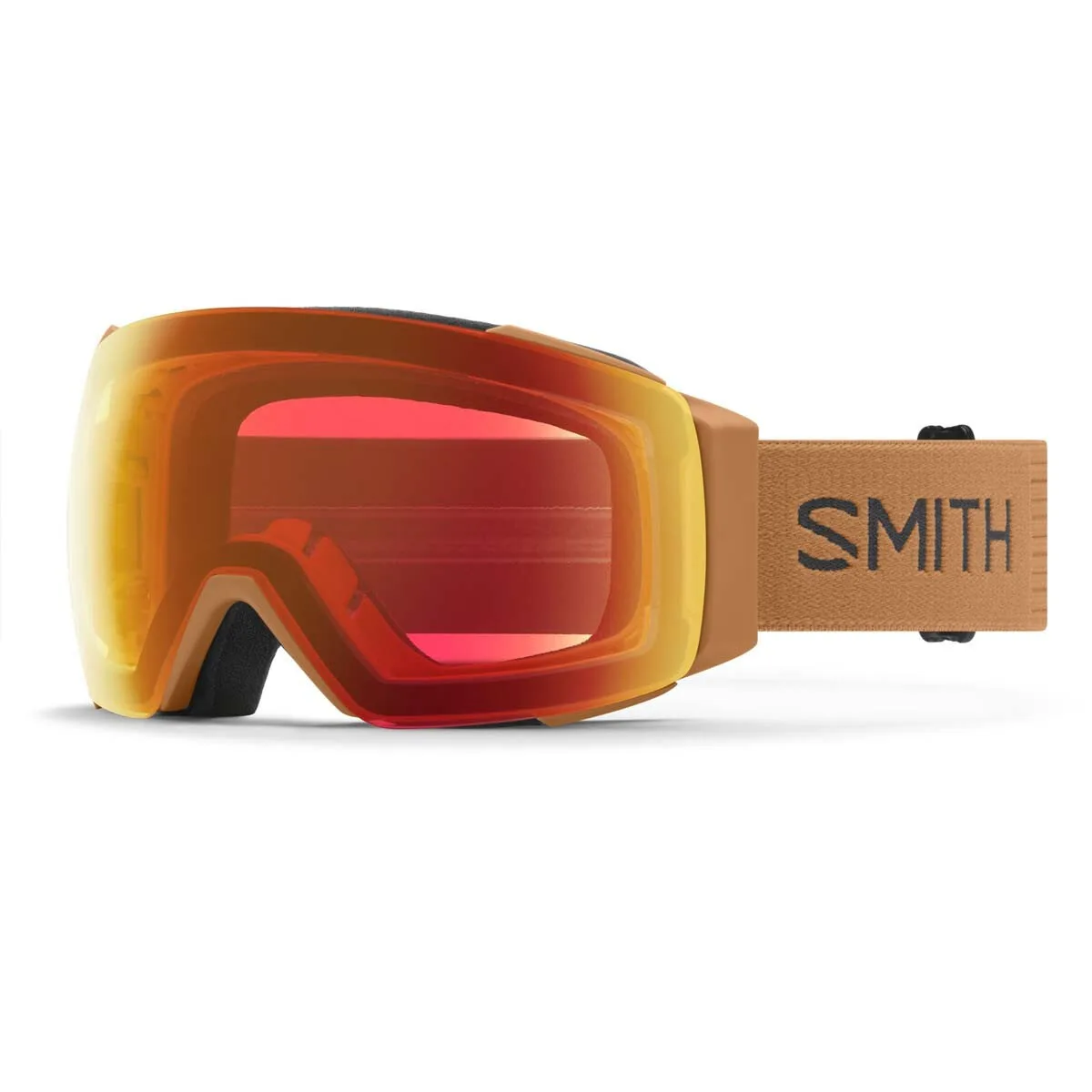
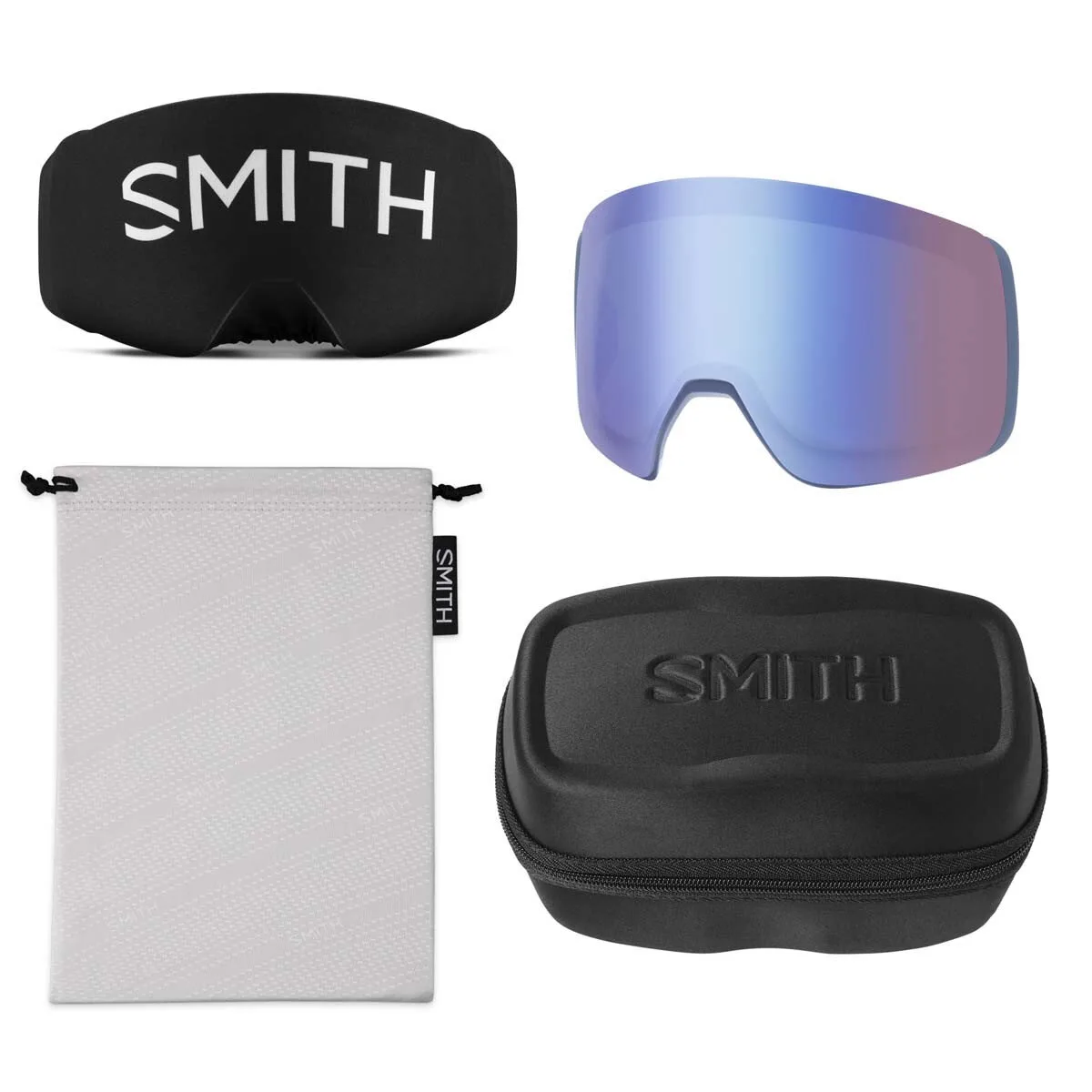
Most days here are S2, which is why almost all the Smith goggles in the shop come with an S2 lens and a VLT of 23%. If you ride a lot in fog and snow, you need a second, light lens. If you do not want to swap, there is a photochromic lens. On the Smith I/O MAG Komodo it is ChromaPop Pro Photochromic and goes from S1 to S3 (VLT 16-55%) depending on the light. The box also has a second lens, ChromaPop Storm Amber.
ChromaPop, MAG and lens shape
ChromaPop is Smith's lens technology. It filters light so that colors and contrast are clearer. In practice you see bumps on the piste better when the light is flat. It does not make bad visibility good, but it helps.
MAG is the magnetic lens-change system. The lens is held by magnets and locks in place, and it can be swapped in seconds, with gloves on. The I/O MAG, 4D MAG and Squad MAG have it. The Smith I/O MAG XL Granite comes with an S2 lens (VLT 23%) and a second lens, ChromaPop Storm Blue Sensor Mirror, for overcast weather.
The lens is spherical or cylindrical. A spherical lens is curved both horizontally and vertically, so it distorts the picture less at the edges. The I/O MAG, 4D MAG and Preview are like that. A cylindrical lens is curved only horizontally and is flatter. The Smith Squad MAG Copy Cat is like that, and it also comes with a second lens for low light.
The Smith 4D MAG XL Granite has BirdsEye Vision: the frame is shaped for a wider field of view, mostly downward, toward your skis or board. The XL frame is for a wider face and is OTG, meaning it fits over prescription glasses. In the 4D series only the XL version is OTG.
Helmet and goggles together
There is one check: put on the helmet, put on the goggles and look at your forehead. There must be no gap between the rim of the helmet and the top of the frame. A gap means a cold forehead, and if the helmet pushes the goggles down, they sit low and press on your nose.
Smith designs its helmets and goggles as a set. The AirEvac vents in the helmet pull warm air out of the goggles, so they fog less. That is why a Smith helmet with Smith goggles usually fits without surprises. Still, bring your old helmet or goggles if you are buying only one of them.
Goggle size matters too. A Medium frame is for narrower faces, Large and XL for wider ones. If you wear glasses, look for OTG in the description.
For kids
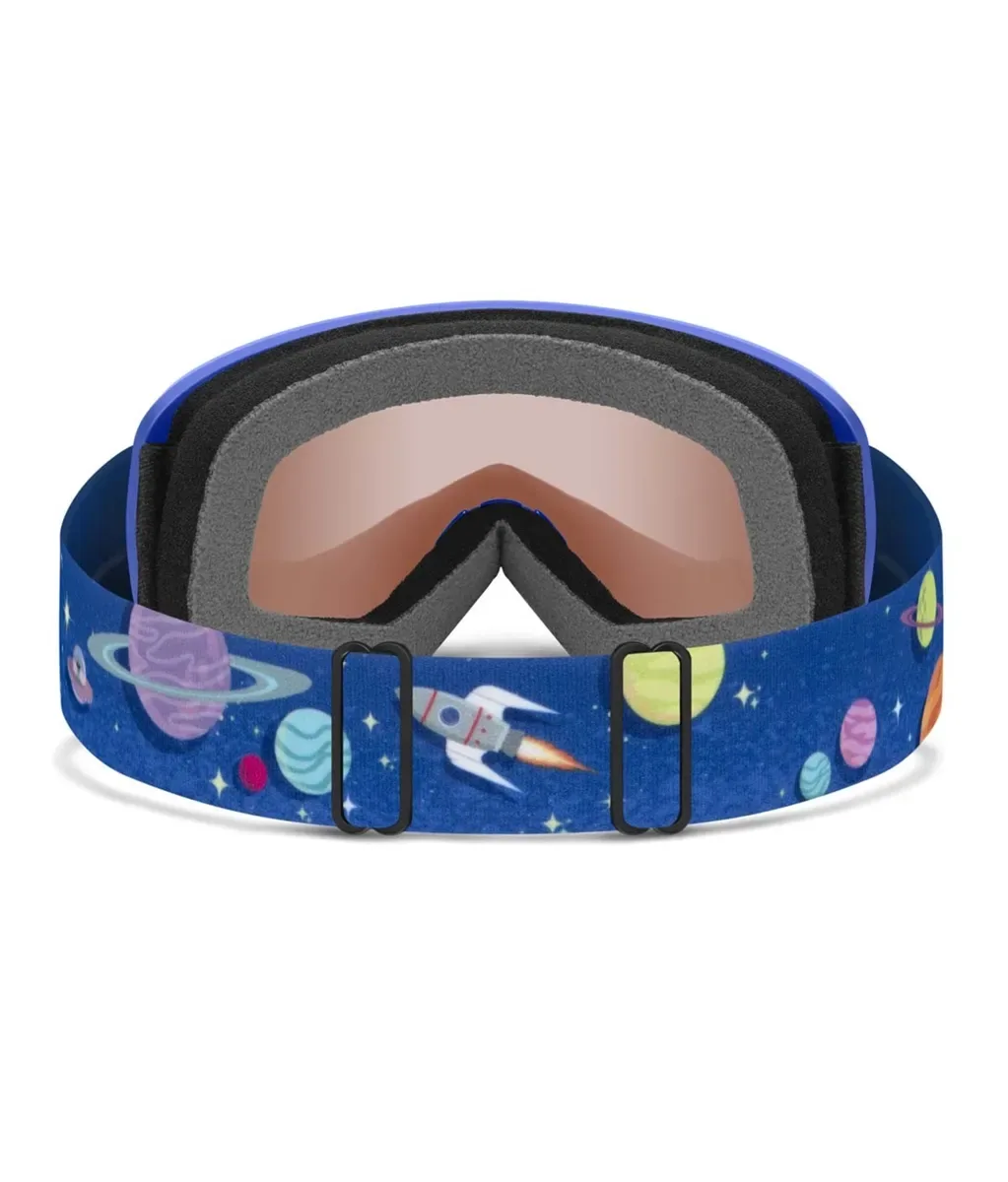
Smith kids' goggles have a smaller frame made for a child's face. The Smith Grom Carnation Puzzle has a ChromaPop Everyday Violet Mirror S2 lens and a Fog-X anti-fog coating. The Smith Snowday Supernova Rockets has a spherical RC36 Rose Copper lens with a VLT of 36%, for overcast weather and partial sun. Both are OTG.
We do not currently have Smith kids' helmets. If the child has a head circumference of 51 cm or more, we try a size S from the adult models. The same rule applies for kids: no gap between the helmet and the goggles, and no "they will grow into it". A helmet that is too big does not protect.

Frequently asked questions
Which goggle lens category is right for most days?
S2, which lets through 18-43% of light and is for changeable weather. That is why almost all the Smith goggles in the shop come with an S2 lens and a VLT of 23%. If you often ride in fog, get a second light lens or a photochromic one.
What Smith helmet size for a 57 cm head circumference?
M, which is 55-59 cm. Measure the circumference with a tape measure about 2 cm above the eyebrows, across the widest part of the back of the head. If you are on the border between two sizes, try both.
What is MIPS in a ski helmet?
MIPS is a thin inner layer that lets the helmet rotate slightly relative to the head in an angled impact. The aim is to reduce the rotational forces that reach the head.
Do I need to replace the helmet after a hit?
Yes. A helmet is built to take one serious impact and is replaced after it, even if nothing shows on the outside.
Is there a Smith ski goggle that fits over prescription glasses?
Yes, look for OTG in the description. The Smith 4D MAG XL Granite is OTG, and in the 4D series only the XL version is. The kids' Smith Grom Carnation Puzzle and Smith Snowday Supernova Rockets are OTG as well.
How to choose
Helmet first. Measure your head, pick a size and try at least two models, because shape decides more than the technology. Then decide whether you want a tightening dial, Fidlock and vents that adjust. After that, the goggles: S2 for most days, a second light lens or a photochromic one if you also ride in fog. Finally, put them on together and look for a gap.
It is easiest to do in the shop. Come to Golo Bardo 6A and try the helmet and goggles side by side. If you cannot come, call +359 887 800 575 or write to us with your head circumference and where you ride. We will tell you what we have in your size.
Comments : 0