



MTB Cockpit: DEITY Handlebars, Stems, Grips and Pedals

The handlebar, stem, grips and pedals are the parts you touch all the time. They are easy to swap and change the bike more than almost any other upgrade. Here we explain the numbers (width, rise, 31.8 or 35 mm, stem length) with DEITY parts and Formula rotors.
The cockpit is where you steer the bike from. A changed handlebar is felt in the very first turn. That is why small numbers matter here. The examples use DEITY parts and Formula rotors that we have in the shop.
Handlebar width
A wide handlebar gives more control and stability at speed and holds the front wheel more easily in rocks. A narrow one fits more easily between trees and makes the bike more agile. For enduro and trail you usually ride between 760 and 800 mm.
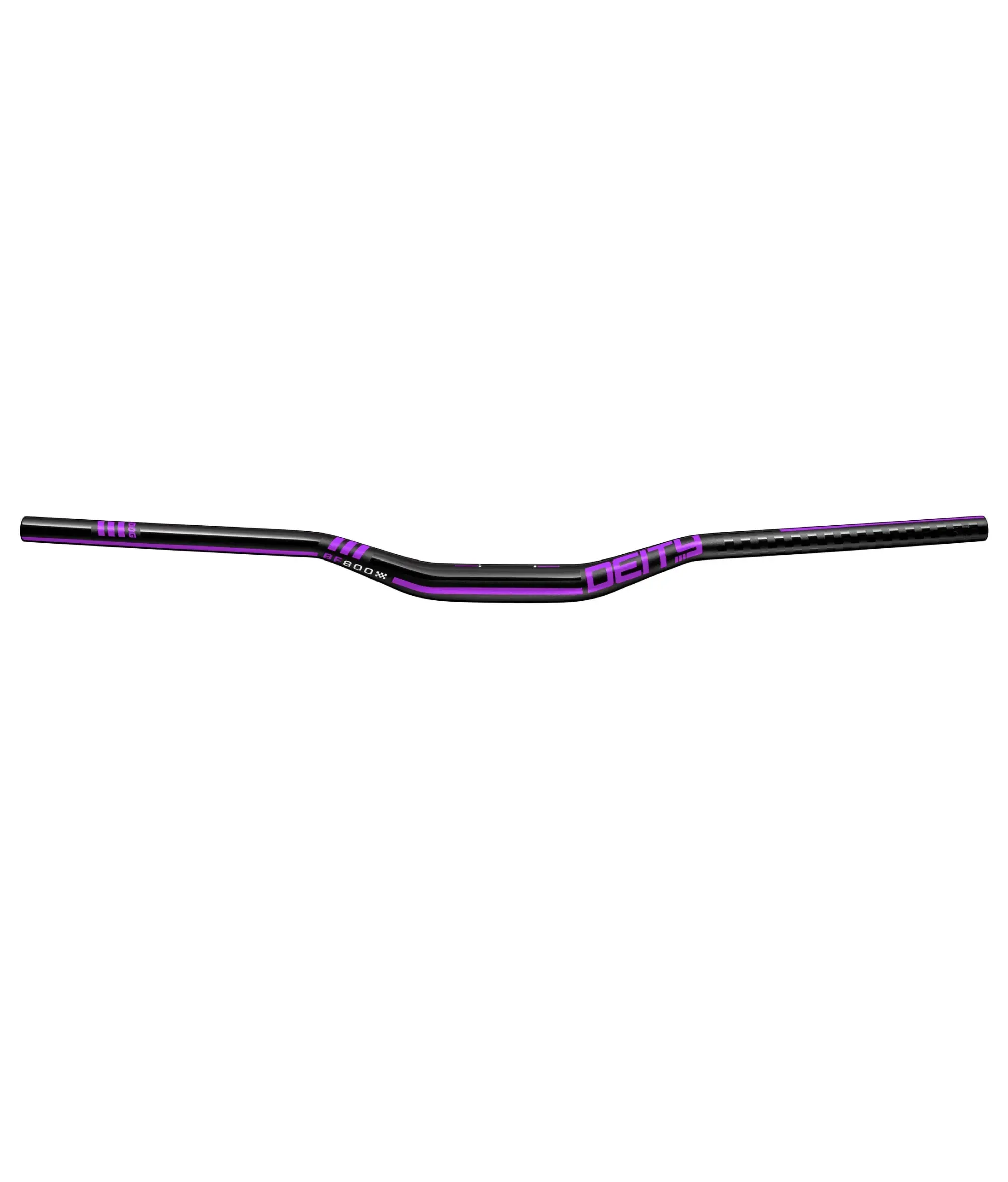
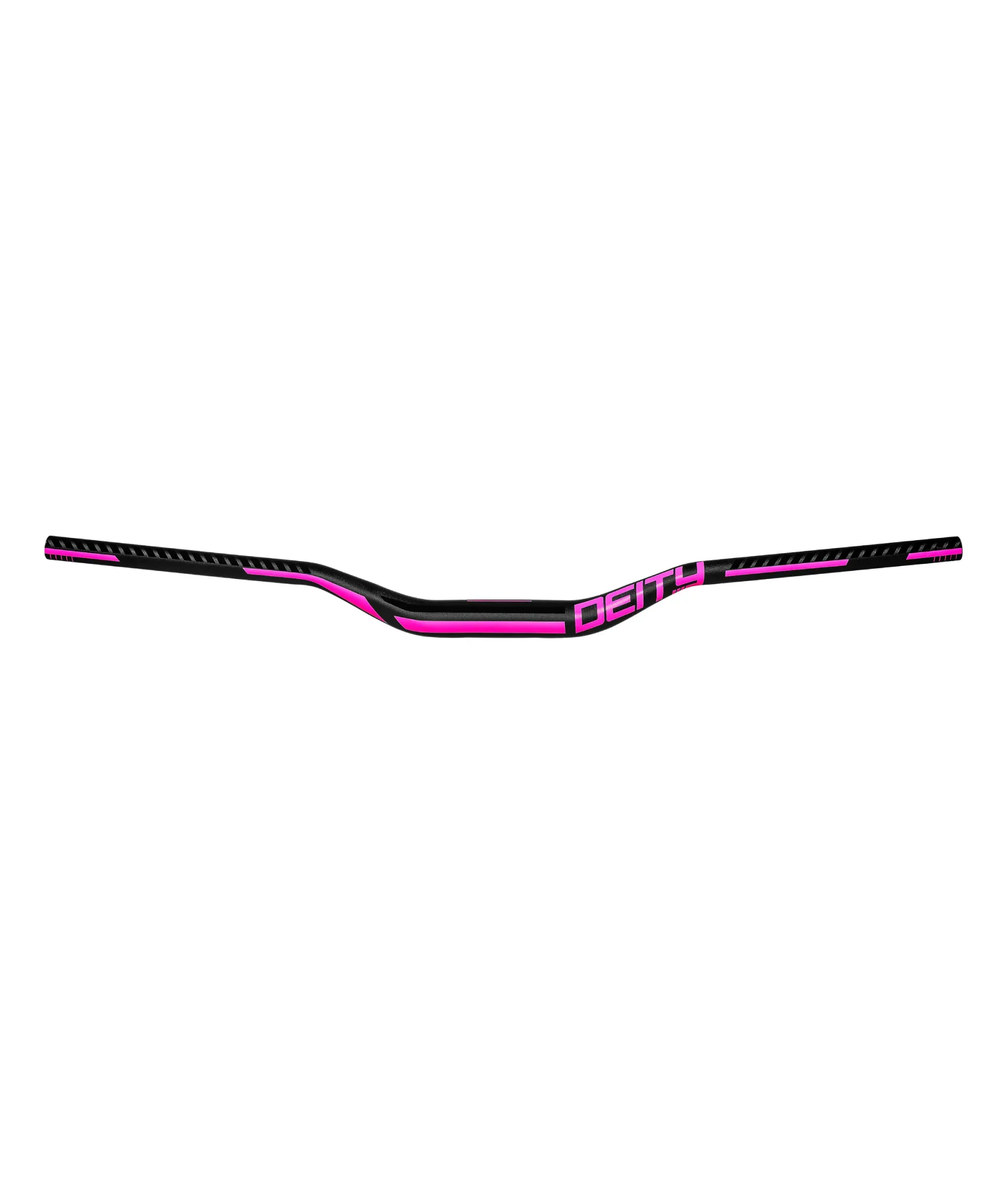
DEITY aluminum handlebars come wide. The DEITY Brendog 31.8 and the DEITY CZ40 31.8 are 800 mm, and the DEITY Racepoint 35 is 810 mm. The DEITY Skyline 31.8 is 787 mm and is the lightest aluminum handlebar from DEITY. All of them have markings for trimming and for centering.
Our advice is simple. Do not cut all at once. Fit the handlebar at full width, ride a few times, and if it is too wide, take off 10 mm per side. What is cut off does not come back.
Rise, backsweep and upsweep
Rise is how much the handlebar lifts from the middle to the ends. More rise means higher hands, a more upright position and more weight toward the back. That helps on steep descents. Lower rise puts more weight on the front wheel, which is better for climbing and for grip in a turn.
DEITY offers a wide choice. The Skyline has 25 mm of rise, the Brendog 30 mm, the Racepoint 38 mm and the CZ40 40 mm. If your bike has a low front end or you are tall, higher rise is an easy way to raise your hands without putting spacers under the stem.
Backsweep is the angle back toward you, upsweep is the angle upward. On DEITY, backsweep is between 8° and 9.5° and upsweep between 4.5° and 5°. These degrees decide how naturally your wrists sit. The CZ40 has 9.5° of backsweep and 4.5° of upsweep, inspired by a motocross handlebar. If your wrists hurt on long rides, a handlebar with a different backsweep may help.
31.8 or 35 mm
The number is the diameter of the handlebar in the middle, where the stem clamps it. The two sizes are not interchangeable. A 35 mm handlebar needs a 35 mm stem, a 31.8 handlebar needs a 31.8 stem. This is the first thing you check before you order.
In general 35 mm is stiffer and more precise under heavy load. 31.8 absorbs more vibration and is softer on the hands on a long descent. DEITY says the Racepoint 35 is made with a flex close to their Blacklabel 31.8. If you are only changing the handlebar, the easy option is to stay with the standard you already have.
The stem: length and height
Today's frames have a long reach, so stems are short, 35 to 50 mm. A shorter stem makes steering quicker and moves you back on the bike. A longer one puts more weight on the front when climbing.
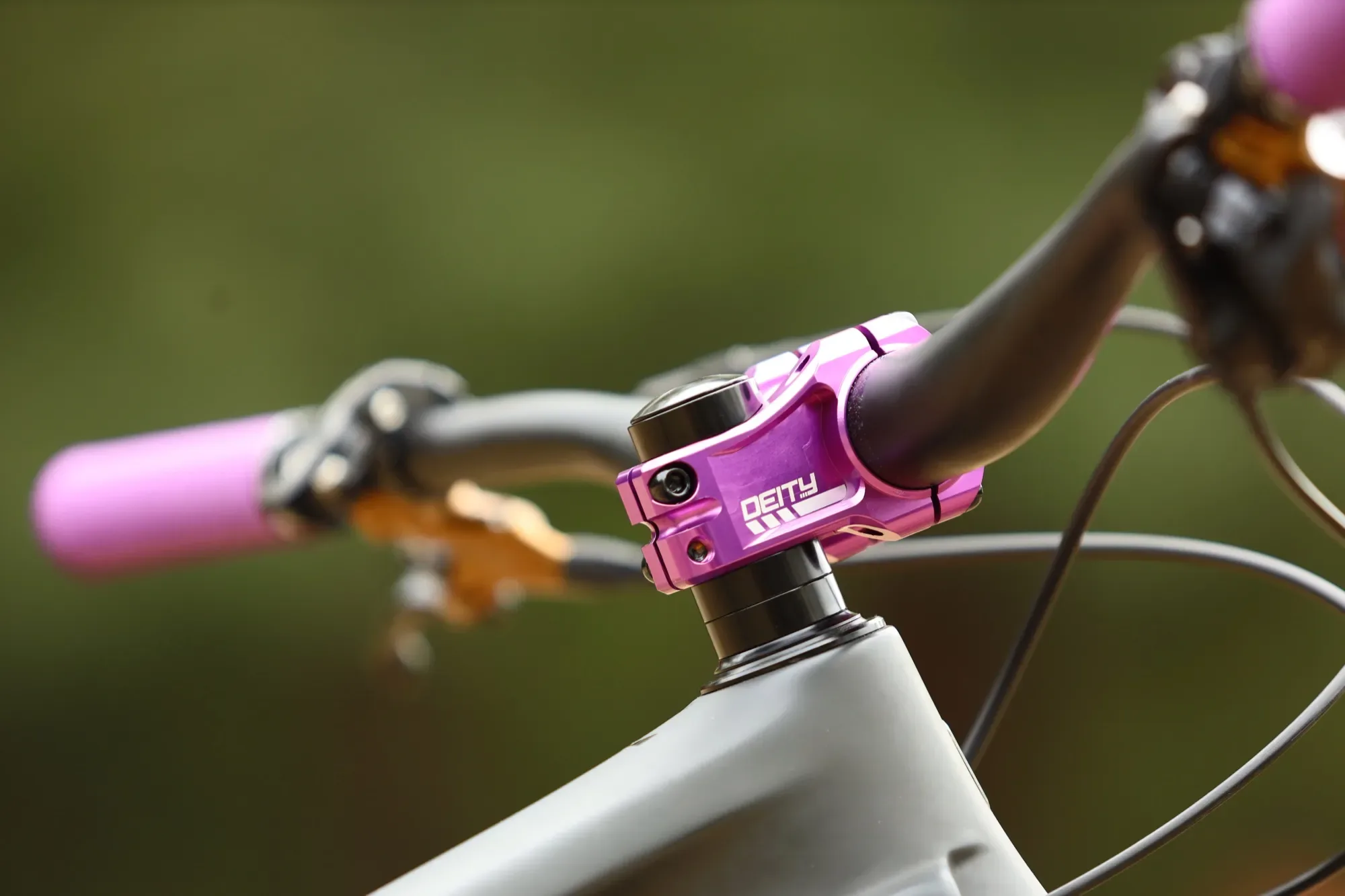
The DEITY Copperhead 31.8 is 42 mm, with a 0° rise and a height of only 30 mm. The low height gives you the freedom to set the handlebar with spacers without raising the front end. The DEITY Copperhead OS-35 is 50 mm, for 35 mm handlebars, with a height of 33 mm and for forks with a 1 1/8" steerer. Both are CNC-machined from 6061-T6 aluminum.
When mounting, the fork steerer must run all the way through the stem, with a small spacer above it. That is how it is in DEITY's instructions.
Grips
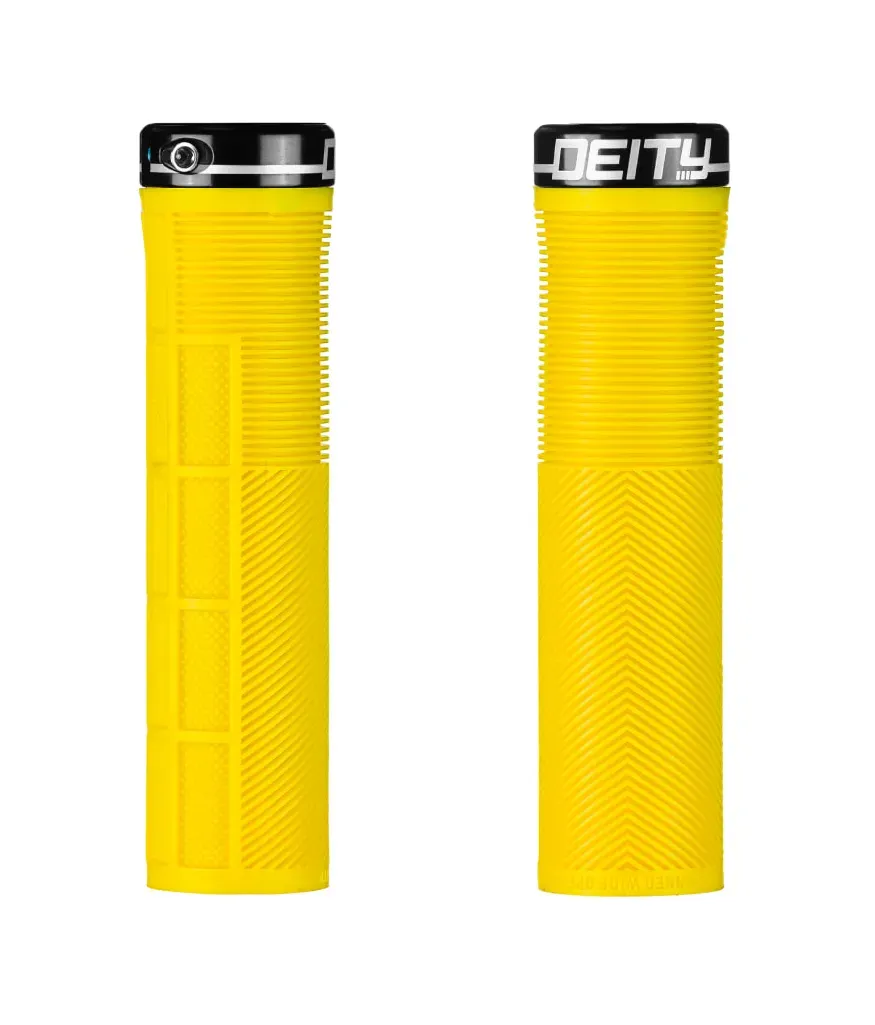
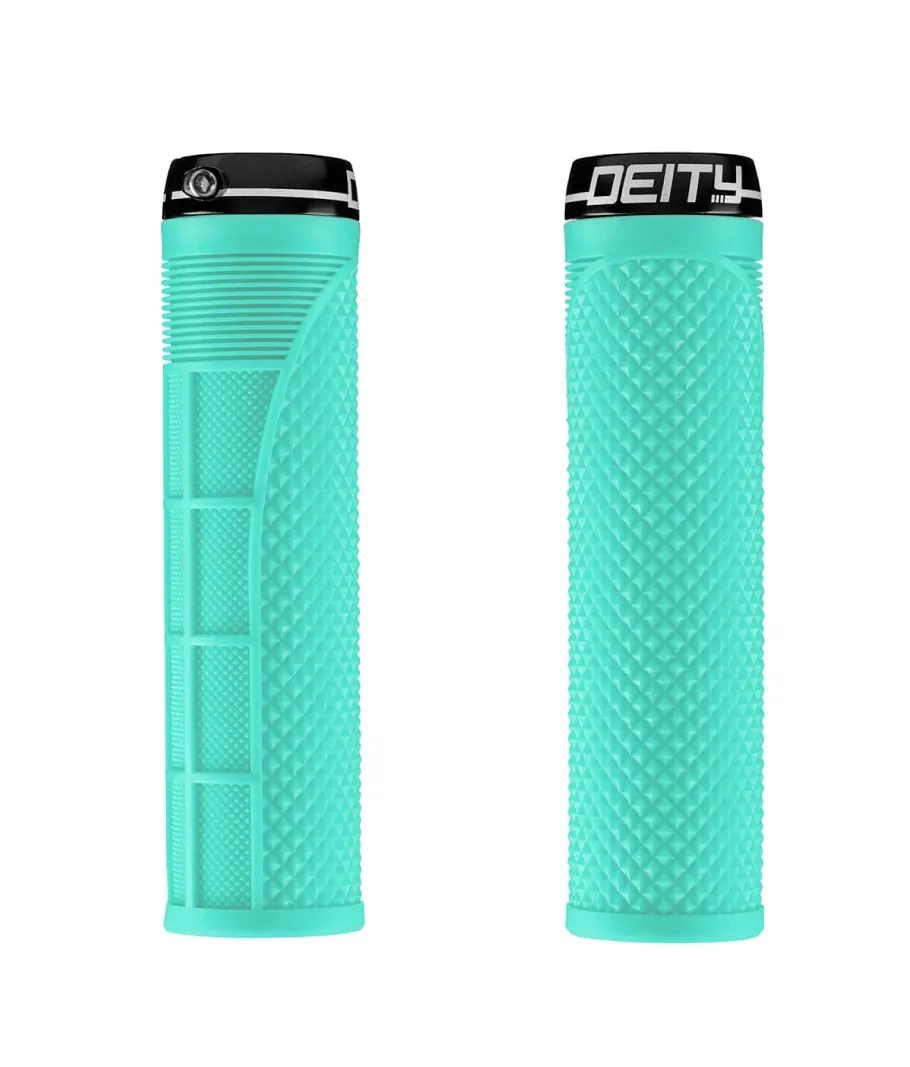
The grip is the only place where your hand touches the bike. Here hand size decides. The DEITY Knuckleduster and the DEITY Lockjaw are 32 mm thick and 132 mm long, a standard size. The DEITY Supracush is 34 mm and is DEITY's softest grip. The DEITY Megattack is 36 mm and 140 mm, for big hands.
The Knuckleduster, Lockjaw, Supracush and Megattack are lock-on, with an aluminum clamp and a bolt, and do not spin on the handlebar. The DEITY Nightcrawler is DEITY's first slip-on grip: no clamp, it slides on. It can be rotated into four positions to wear evenly.
A thick grip absorbs more impact. If your hand does not wrap around it comfortably, though, your forearm tires faster. Try it in the shop before you decide.
Flat pedals
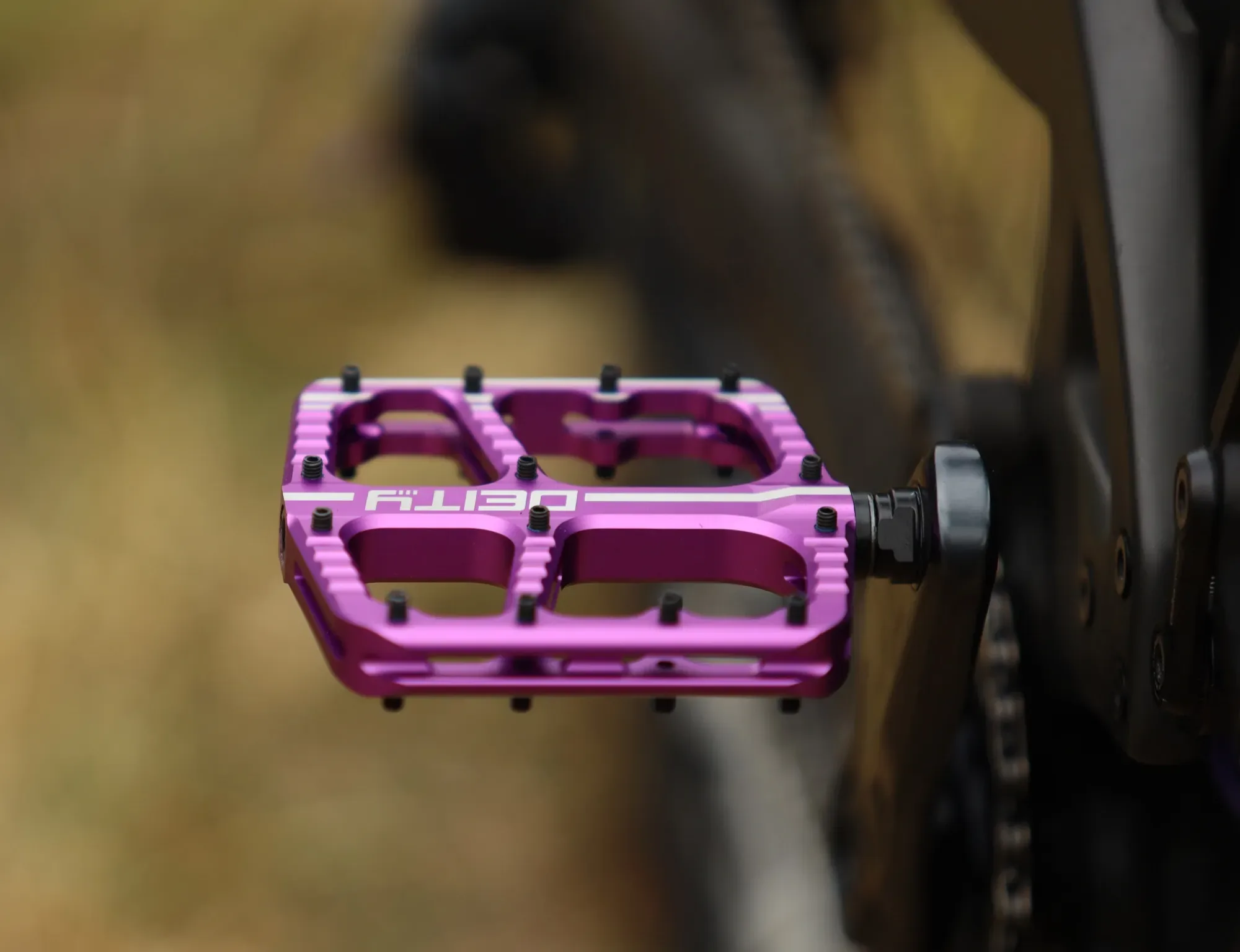
With a flat pedal you look at three things: how big the platform is, how concave it is and how thick it is. The concave holds the shoe in the center. With a thin pedal the shoe is closer to the axle, so the foot sits more steadily and the pedal strikes rocks less often.
The DEITY Tmac has a 110 x 105 mm platform and 2.5 mm of concave on each side, one of the deepest. The DEITY Flat Trak is the same size, with 1 mm of concave and 14 mm of thickness, with no bulge over the axle. According to DEITY it is their thinnest pedal. Both are aluminum.
The DEITY Deftrap is made of fiberglass-reinforced nylon, with a 113 x 103 mm platform and 10 pins per side. It is lighter, at 391 g per pair. Nylon slides over rock more easily instead of catching on it.
Formula rotors: 180 or 203
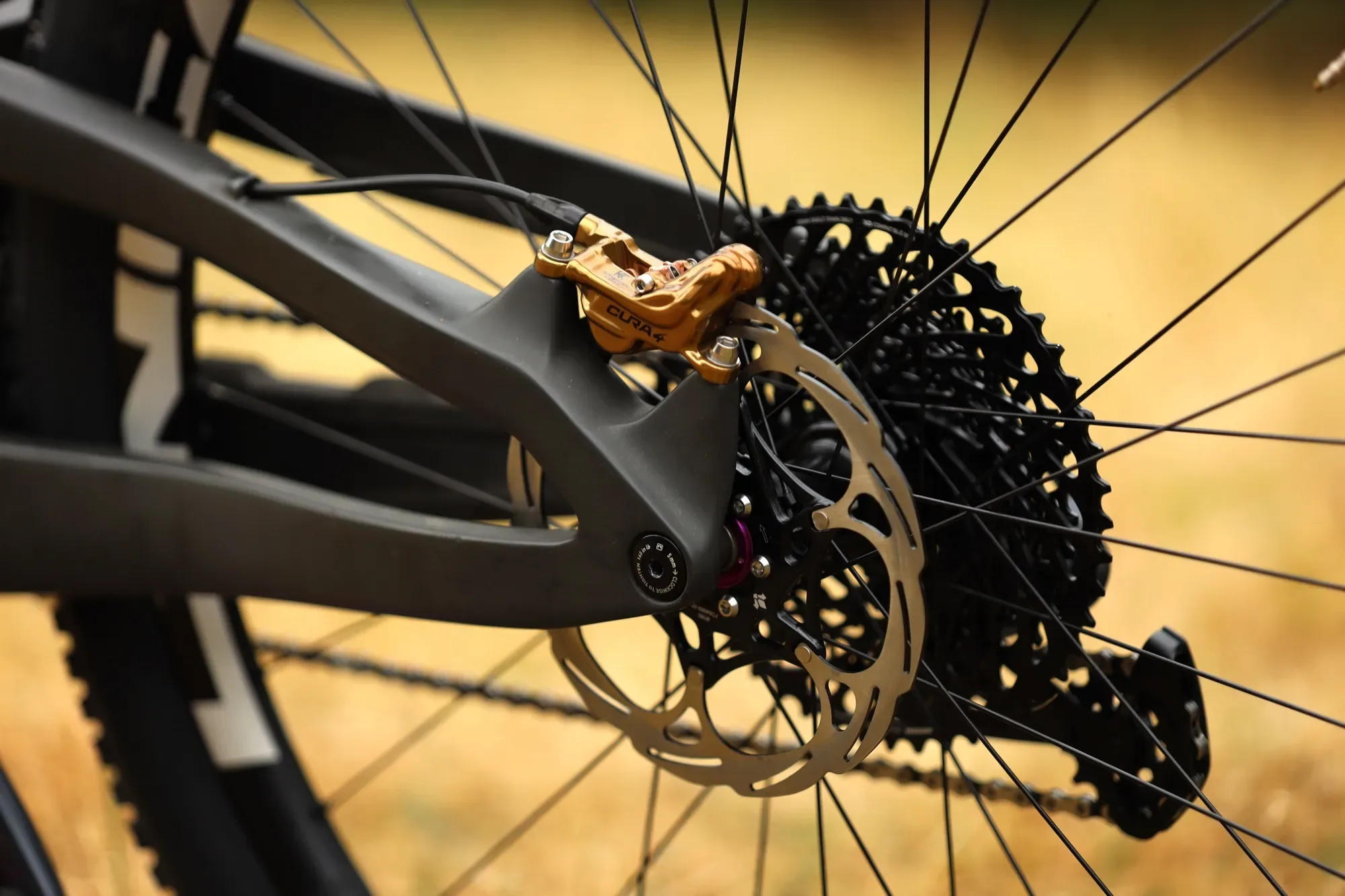
A larger rotor gives more braking force for the same lever pull and absorbs more heat. On a long descent that means less overheating. For trail, 180 mm is usually enough. For enduro, downhill, e-bikes and heavier riders we put 203 mm on the front.
The Formula 180 is a one-piece stainless steel rotor with 6 bolts. For Center Lock hubs Formula makes a separate adapter. The Formula 203 is monolithic, 2.25 mm thick and is for Cura 2 and Cura 4 brakes. The two-piece Formula 203 has a steel braking surface and an aluminum carrier: it is lighter and dissipates heat better.
Before you get a larger rotor, check what size your fork and frame are rated for and whether you need an adapter for the caliper.
Frequently asked questions
Can I put a 35 mm handlebar in a 31.8 stem?
No. The two sizes are not interchangeable: a 35 mm handlebar needs a 35 mm stem, a 31.8 handlebar needs a 31.8 stem. Check this before you order.
What handlebar width for enduro and trail?
Usually between 760 and 800 mm. DEITY aluminum handlebars come wide, 787-810 mm. Do not cut all at once: ride a few times and take off 10 mm per side.
What stem length for a modern MTB frame?
Short, between 35 and 50 mm, because today's frames have a long reach. A shorter stem makes steering quicker, a longer one puts more weight on the front when climbing.
What grips for big hands?
Thicker and longer ones, like the DEITY Megattack, 36 mm and 140 mm. The standard size is 32 mm and 132 mm, like the DEITY Knuckleduster and Lockjaw.
What front rotor for enduro or an e-bike?
203 mm. A larger rotor gives more braking force and absorbs more heat, while for trail 180 mm is usually enough. Before that, check what size your fork and frame are rated for and whether you need an adapter for the caliper.
An example and how to choose
On the EVIL Offering V2 we built, the cockpit is entirely DEITY: a 35 mm carbon handlebar, a Copperhead OS-35 stem, DEITY grips and Flat Trak pedals. The brakes use Formula 180 mm rotors. Everything is chosen to work together, in size and in looks.
The order of choosing is the same. First the clamp standard, 31.8 or 35, handlebar and stem together. Then width and rise according to your height and terrain. Then the stem according to the frame. Last, grips according to your hand and pedals according to your shoe.
If you are not sure, come to the shop at Golo Bardo 6A with your bike. We will measure what you have and you can try handlebars and grips on the spot. You can also call +359 887 800 575 or write to us with your bike model and frame size.
Comments : 0