



Lib Tech MC Wayfinder II Review: Deep Snow and Piste Surf Board

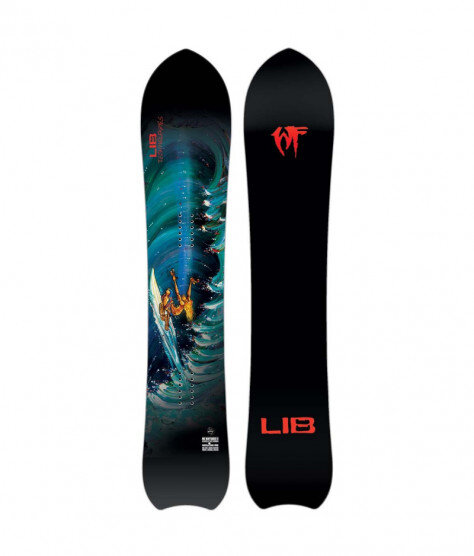
The Lib Tech MC Wayfinder II is Matt Cummins' deep snow board, and it turns out to be a great friend on groomers too: directional C2, a big floating nose, a 4" setback (stance moved toward the tail) and Magne-Traction. We carry the 160 from the 2024/25 generation. Who it is for: a rider of 75 kg and up who wants one board for deep snow days, the trees and groomed terrain, without swapping boards at lunch.
 -25%
- Delivery in up to 2 days
- Shop at 6A Golo Bardo St., Sofia - since 1997
- Size advice:
+359 887 800 575
 Snowboard Science ep. 3: C2 hybrid profile - rocker between the feet, camber under them
Wayfinder is 30 years of Matt Cummins' deep snow experience in one board
The MC Wayfinder II is Matt Cummins' signature deep snow board: a directional C2 with a big floating nose, a strong setback and a lot of surf in its character. Matt has been designing boards with Lib Tech for more than 30 years. In the Wayfinder he put everything he learned at Baker, Baldface and in Japan, where the snow is deep every day.
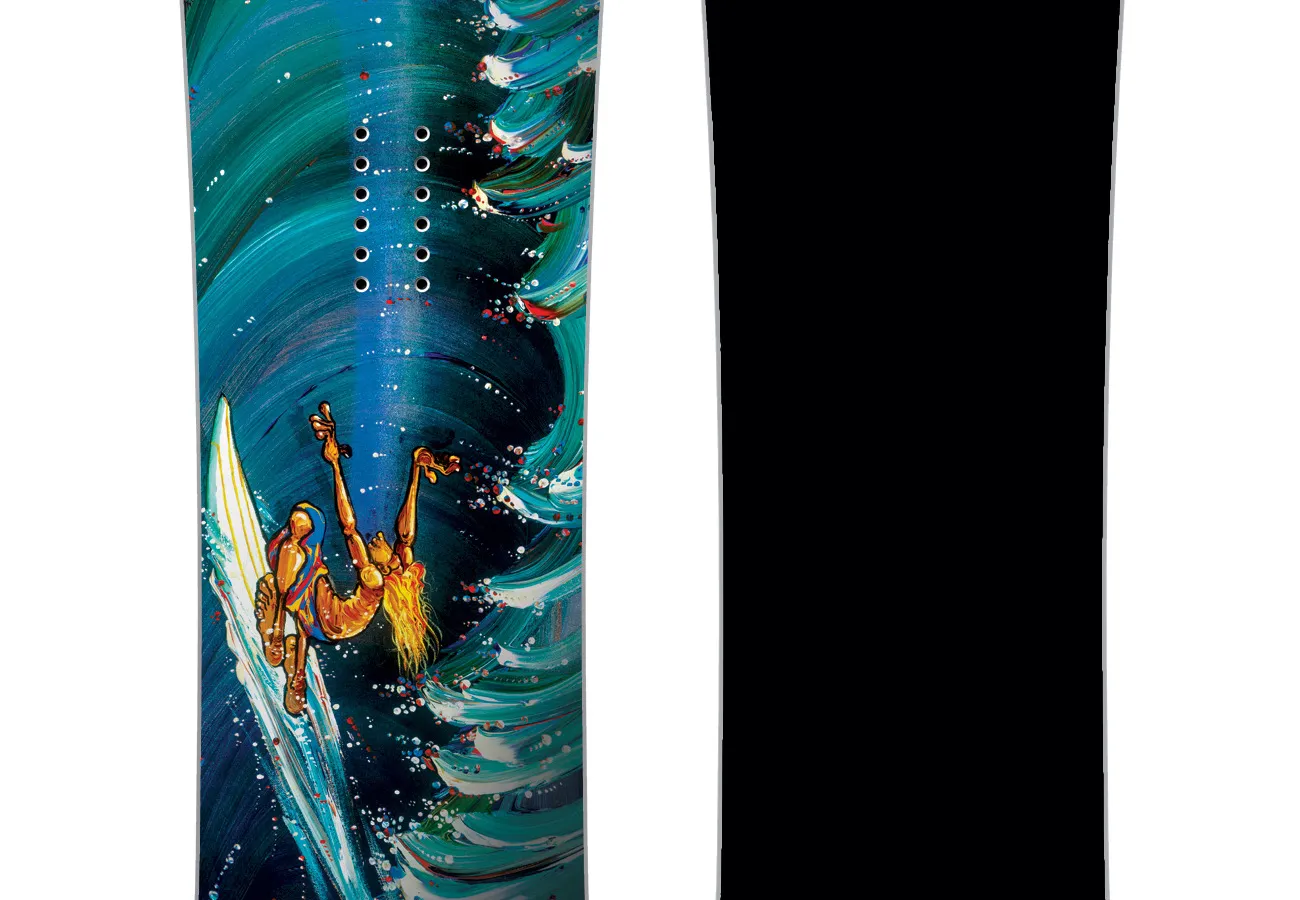
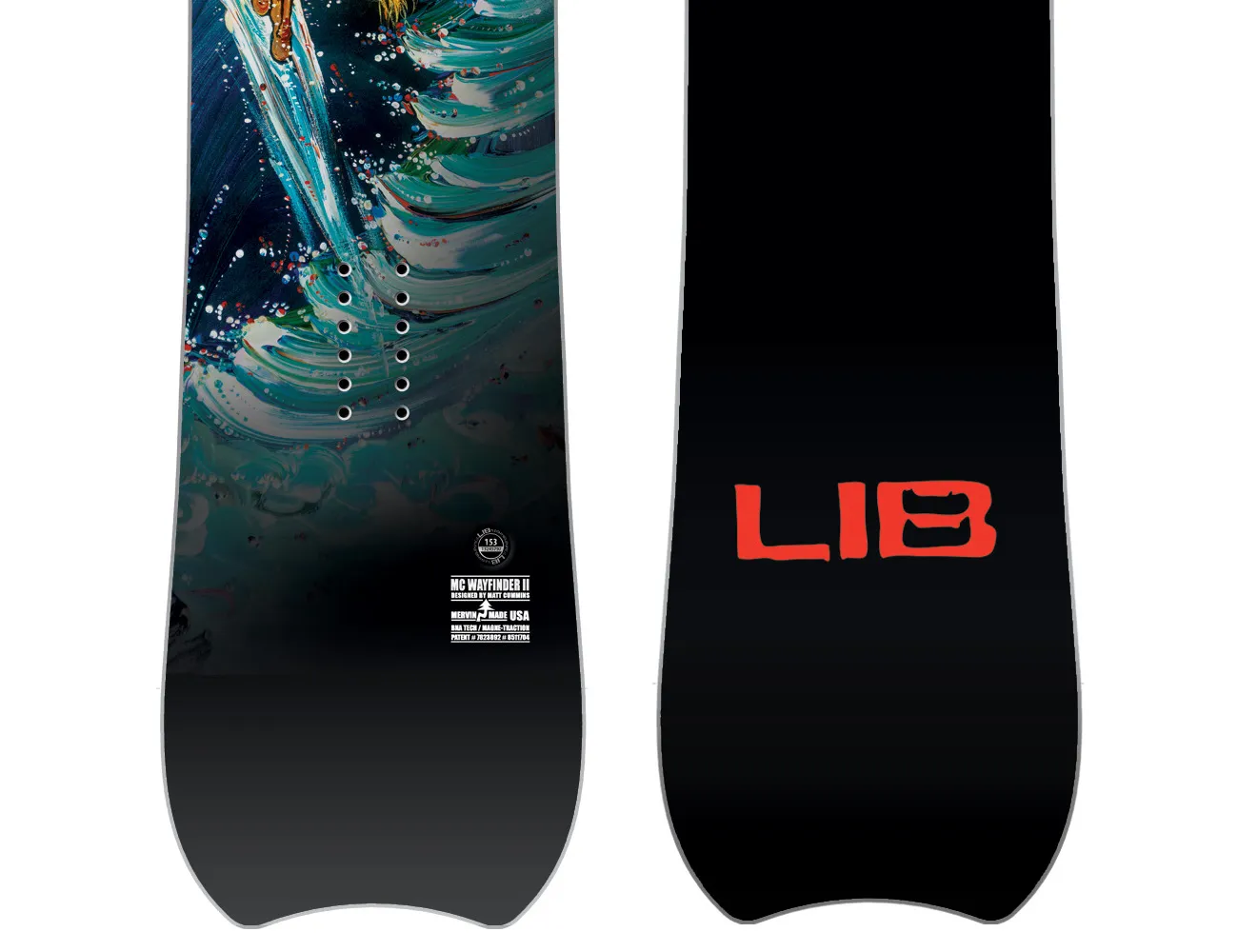
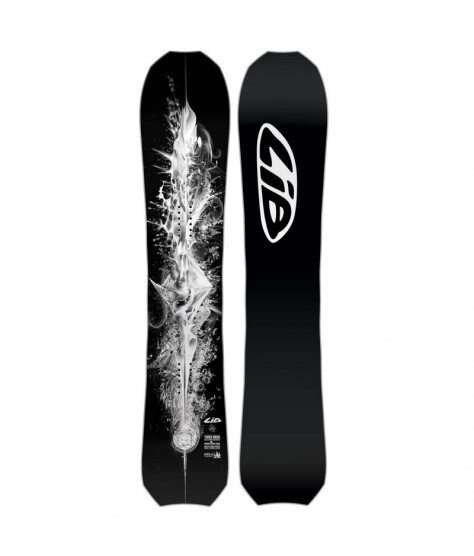
The first MC Wayfinder came out at Lib Tech for the 2018/19 season, and the Wayfinder II arrived for 2020/21. Ours is the 2024/25 version, with artwork by Steven Valiere: a surfer on a wave, about as fitting an image for this board as you can get. For 2025/26 Lib Tech already makes the MC Wayfinder III with a shorter turn radius for groomers.
Directional C2: the nose floats on its own, camber protects the edge on hardpack
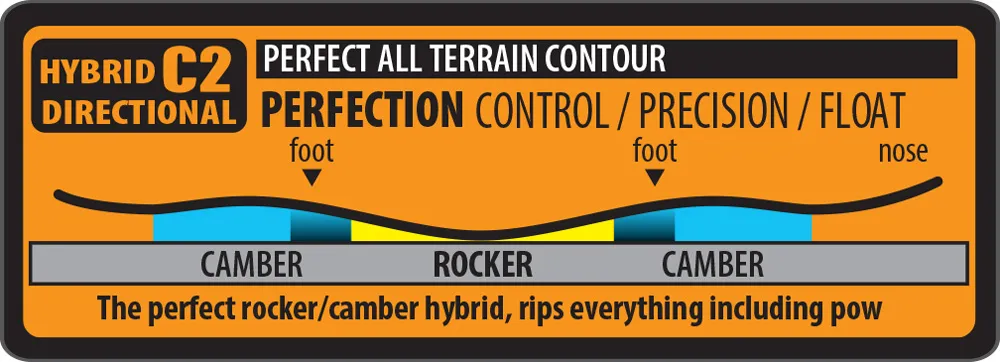
Directional C2 / hybrid C2: rocker between the feet and camber under both feet, with a set-back stance and a longer nose.
Directional hybrid C2 is the profile on Lib Tech's technical panel: rocker between the feet, camber under both feet. The rocker lifts the nose and gives freedom in soft snow, while the camber zones bring back control, carving and pop. In deep snow it is extremely strong thanks to the directional C2, the 4" setback, the tapered tail (a nose wider than the tail) and the big nose, while on hard snow the control comes from the camber zones and Magne-Traction.
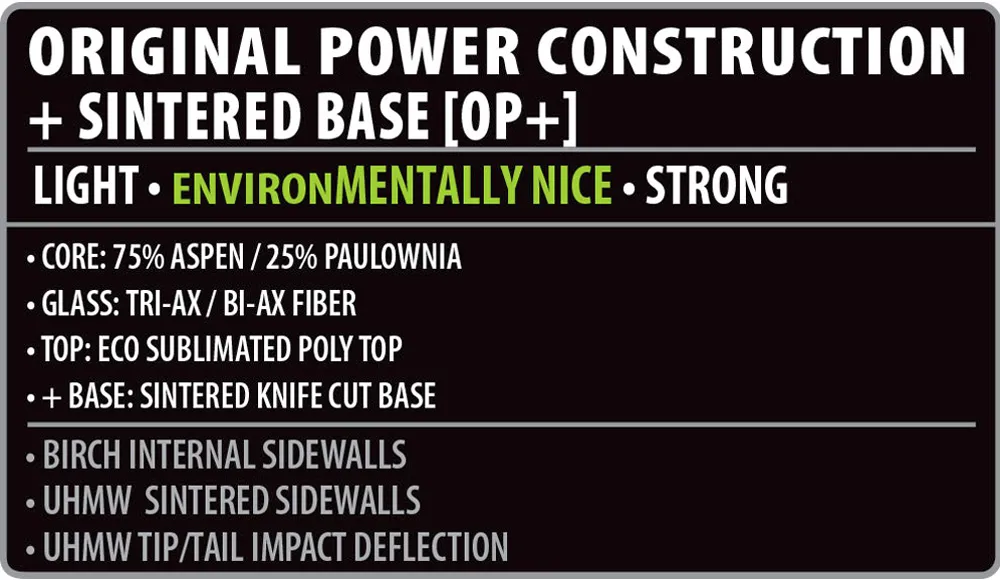
Lib Tech calls the nose "practically unsinkable in deep snow", and the raised tail gives freedom for off-piste riding and freestyle. Underneath is OP+ construction: a wood core of 75% aspen and 25% paulownia, triaxial/biaxial fiberglass and a sintered base (faster, holds wax).
 Snowboard Science ep. 5: Magne-Traction - the edge that bites into ice
- directional C2
- Matt Cummins
- 4" setback
- volume shifted
- big floating nose
- tapered tail, raised
- Magne-Traction
- OP+ construction, sintered base
- flex 7
- artwork by Steven Valiere (2024/25)
- freeride / deep snow / carving / groomed terrain
People buy it for deep snow and find out it is great on the groomed runs
We have sold it for more than four years now. Many customers bought it for deep snow and only later found out it is a great friend on the piste too. The reason is the shape: Lib Tech describes it as a "beautiful hourglass", with a surf character, floaty and born to carve at the same time, and calls the Wayfinder an "everyday board" for groomed terrain.
On the piste, the 7 m turn radius of the 160 turns in a small space and gives long, deep carving arcs, like surfing a wave. In the trees the nose stays above the snow while the tapered tail sinks and pivots the board. On an icy morning groomer, Magne-Traction holds where a smooth edge would slide. Lib Tech says it without modesty: "the best groomer board on a deep snow day of all time".

For a confident rider who wants one board for deep snow and groomed terrain
A flex (how soft or stiff the board is) of 7 and the camber zones call for a rider who already edges confidently. It is not a board for the first week, but it is not a narrow deep snow tool that is a punishment on the piste either. Quite the opposite: in our view the Wayfinder II is one of the most versatile versions of this shape, for any terrain. It is not the board for park and riding switch (riding with the other foot forward): the 4" setback and the directional shape say clearly which way it rides.
Unique snowboard oddities like the MC Wayfinder II should definitely be tried, and best of all owned.
Size: 160, with shifted volume - ride it shorter
At our shop the Wayfinder II comes in 160, for riders of 75 kg and up according to Lib Tech. The board has shifted volume (shorter and wider for the same volume) and the brand advises going 2-10 cm shorter than your usual size. The 26.7 cm waist and 686 sq in of area give float (in powder) and room for a bigger boot. Enter your weight and boot size to see whether the 160 is your size.
| Size | Contact length | Waist | Turn radius | Flex |
|---|---|---|---|---|
| 160 | 111 cm | 26.7 cm | 7 m | 7 |
-25%- Delivery in up to 2 days
- Shop at 6A Golo Bardo St., Sofia - since 1997
- Size advice:
+359 887 800 575
Wayfinder II vs Orca, Something and Jamie Lynn Short Wide
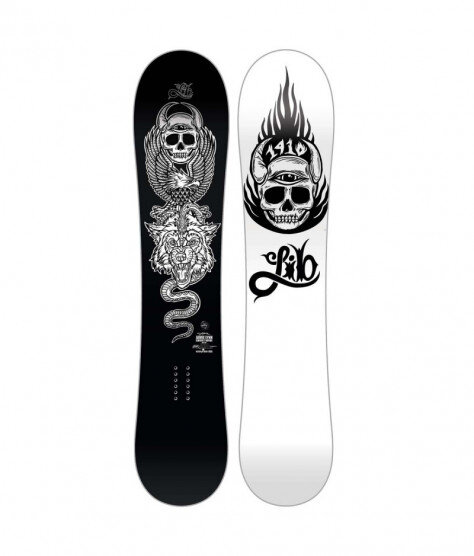
In shape and philosophy the Wayfinder is clearly close, visually and functionally, to Travis Rice's Lib Tech Orca, but it is a little narrower, a touch less aggressive and, in our view, better suited to any terrain. The Orca is a C2X with a short Whale Tail: the second arrow for big snow. GNU Something is the same idea told through GNU's history: directional C2, 4" setback, but with a swallowtail. Lib Tech Jamie Lynn Short Wide is the shorter, wider route to float, for the trees and big boots.
| MC Wayfinder II 160 | Orca 156 | Something 161 | JL Short Wide 150 | |
|---|---|---|---|---|
| Profile | directional C2 | directional C2X | directional C2 | directional camber |
| Tail | tapered, raised | Whale Tail | swallowtail | short, slight taper |
| Setback | 4" | about 2.5" | 4" | 3" |
| Waist | 26.7 cm | 26.7 cm | 26.1 cm | 27 cm |
| Terrain | deep snow, groomed terrain, carving | deep snow, trees, steeps | deep snow, carving on hardpack | deep snow, trees |

Frequently asked questions
Is the MC Wayfinder II good on the piste?
Yes. Many of our customers bought it for deep snow and then found out it is great on the piste too. The camber zones, the 7 m turn radius and Magne-Traction hold on hard snow.
What is the difference between the Wayfinder II and the Orca?
They are close in idea. The Wayfinder is a directional C2, a little narrower and less aggressive, and in our view better suited to any terrain. The Orca is a C2X with a Whale Tail, more for big snow.
How much shorter should I go?
Lib Tech advises 2-10 cm shorter than your usual board because the volume is shifted. The 160 is for riders of 75 kg and up.
What is the difference between the Wayfinder II and III?
The III is for 2025/26: the same philosophy with a shorter turn radius for groomers. Our 160 is the Wayfinder II from 2024/25.
Can it be ridden switch?
It can, but it was not made for that. The 4" setback and the directional shape work in one direction. For switch riding and park there are boards with a true twin shape (identical nose and tail, rides the same in both directions).
How to choose and where to see it
If you want a board only for big snow, take the Orca. If you want a deep snow board with history and a swallowtail, the GNU Something. If you want float in a short size, the Jamie Lynn Short Wide. And if you want one board for deep snow days and for groomed terrain, one you will not leave in the car at lunch, the MC Wayfinder II. Come to our shop at Golo Bardo 6A in Sofia or call us at +359 887 800 575 and we will show you the board in person and check your weight and boot size. We have been riding this stuff since 1997.
Comments : 0