



Lib Tech Lib Rig Review: Austen Sweetin's Camber Machine

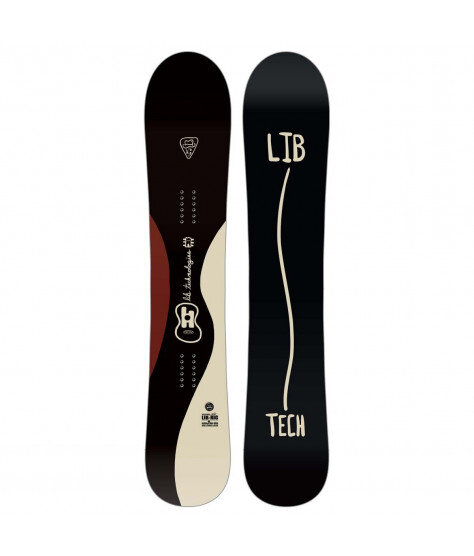
The Lib Tech Lib Rig is Austen Sweetin's board for someone who rides the piste, deep snow, natural jumps and big lines and does not want a separate board for each: setback camber (stance moved toward the tail), an early-rise nose (nose and tail lift earlier), a slight taper (nose wider than the tail), a 1.5" setback and Magne-Traction. We carry the 2025/26 in 153, 157, 159, 160W and 162, and a 156 from 2024/25. Who it is for: a confident rider who loves carving and speed but does not give up deep snow days.
 -20%
- Delivery in up to 2 days
- Shop at 6A Golo Bardo St., Sofia - since 1997
- Size advice:
+359 887 800 575
 Snowboard Science ep. 1: Camber - how the classic profile works
The Lib Rig is Austen Sweetin's pro model: his favorite shapes in one board
The Lib Rig is Austen Sweetin's pro model: one board for a rider who wants the piste, deep snow, groomed terrain, freeride, natural jumps and big lines without keeping a separate board for each. The story behind it is simple: Austen has ridden almost every board Lib Tech makes, in all conditions, mostly in deep snow. He studied his favorite geometries and, together with Mervin's experiMENTAL team, combined them into one. Lib Tech calls it "a powerful, fast piste board that blows up deep snow" and ends with "His board is your board".
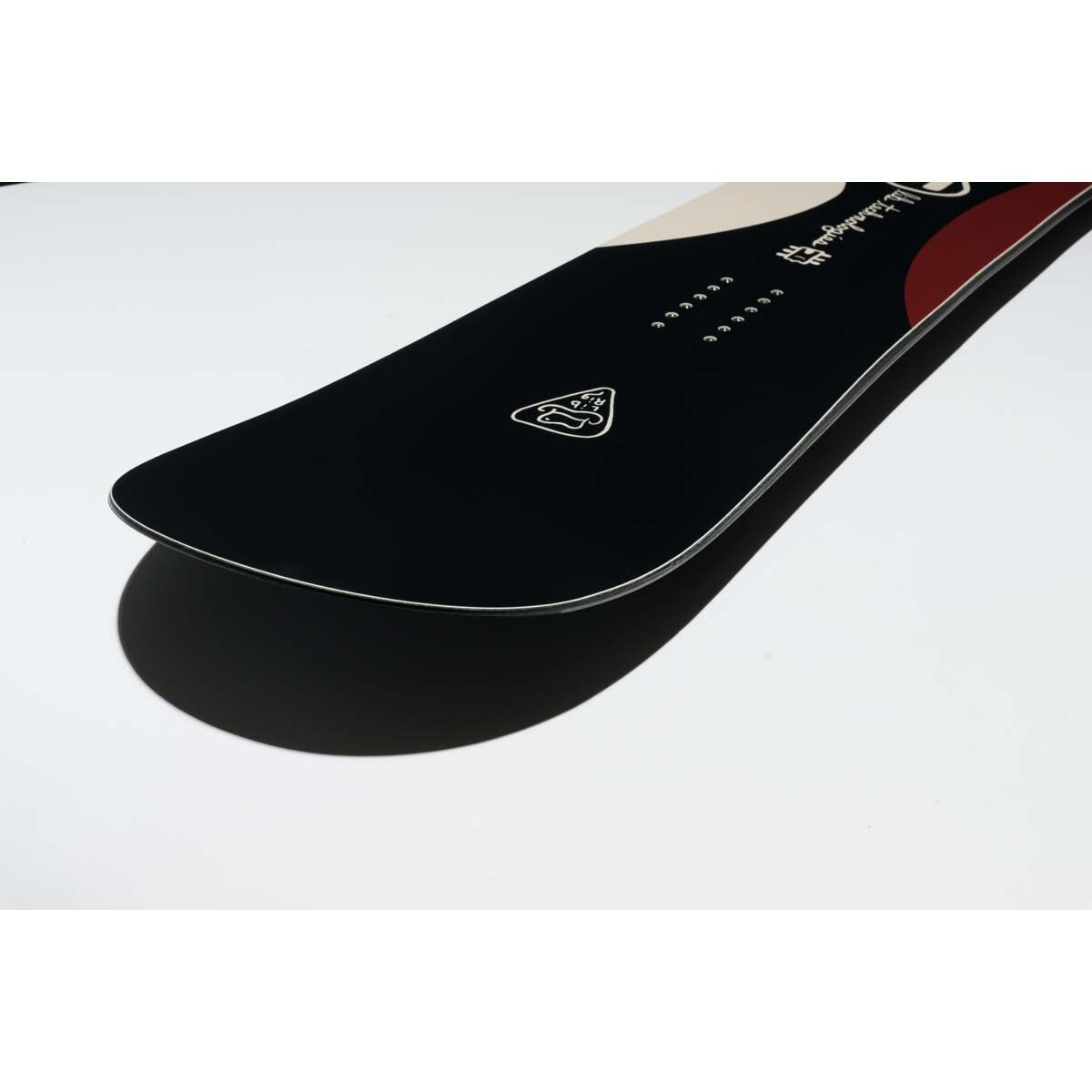
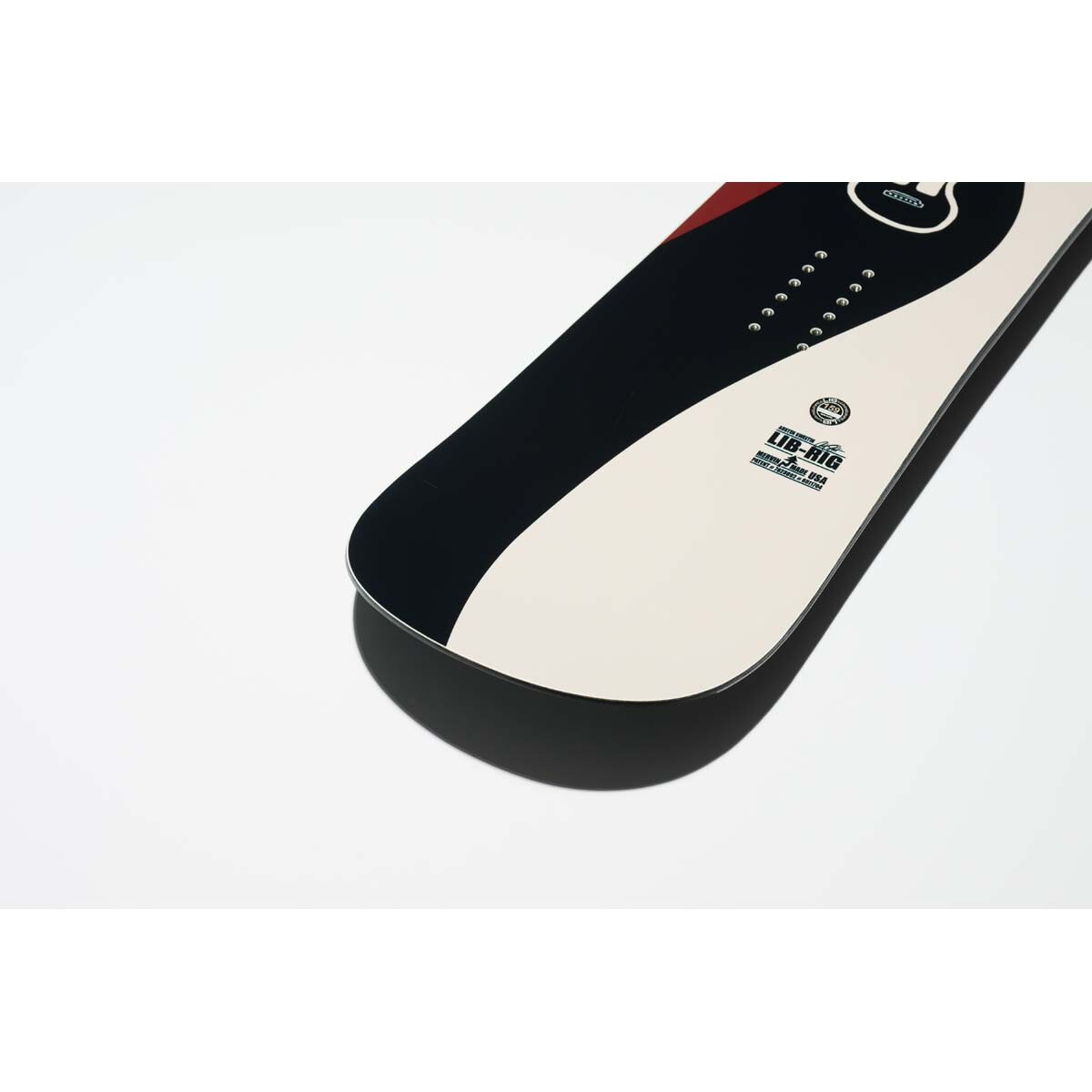
The model has been in Lib Tech's range since 2022/23. The graphic is by Austen himself, simple and clean: black with bright orange for 2024/25, black, cream and burgundy for 2025/26.
Setback camber with an early-rise nose, not C3: carving at the back, float at the front
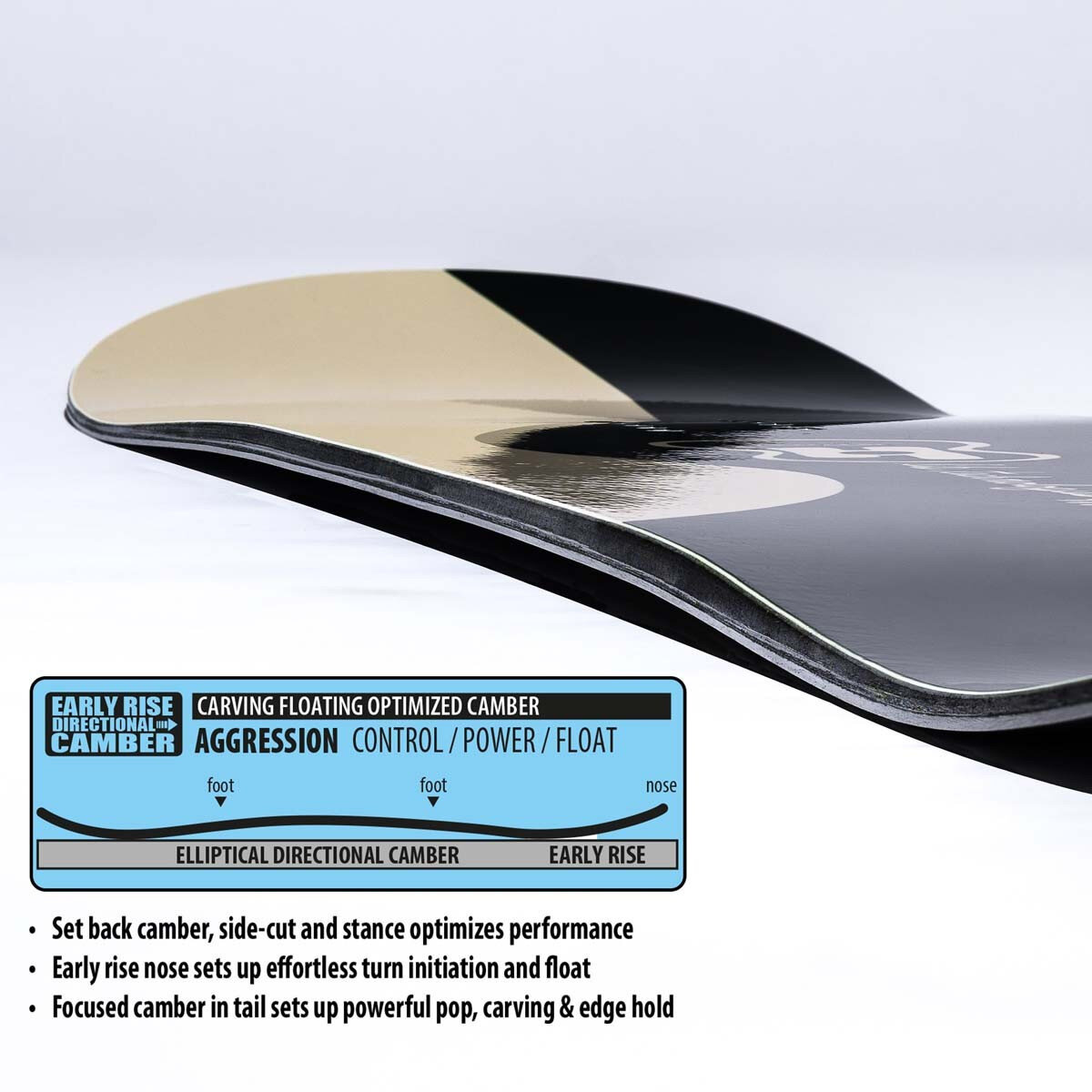
Setback camber with an early-rise nose: the camber is shifted back toward the tail and the nose lifts early, with no rocker between the feet.
An important technical clarification: the current Lib Rig is not a C3 but a setback camber with an early-rise nose. On hard snow that gives you very strong carving and pop, and in soft and deep snow the nose goes in without effort. Lib Tech's technical panel calls it directional early-rise camber and explains the three things it does: the setback camber, the turn radius and the stance (distance between the bindings) work together, the early-rise nose starts the turn without effort and gives float (in powder), and the camber concentrated in the tail gives pop, carving and edge grip.
The shape is slightly directional, with a slight taper and about 1.5" of setback: the direction is clearly preferred, but the freestyle potential remains. Lib Tech says the tail also works when riding switch (riding with the other foot forward), so you can ride backward when you need to. Underneath is OP construction: a wood core of aspen and paulownia and a fast Knife Cut sintered base (faster, holds wax). The flex (how soft or stiff the board is) is 7.
- setback camber / early-rise nose
- Austen Sweetin
- slightly directional shape
- slight taper
- 1.5" setback
- Magne-Traction
- OP+ (OP construction + Knife Cut sintered base)
- flex about 7/10
- artwork by Austen Sweetin
- groomed terrain / freeride / deep snow / natural jumps
Morning corduroy, natural jumps and deep snow: one modern camber machine
Clean carving on the morning corduroy, strong natural jumps off the side of the piste, speed and deep snow: this is a modern camber machine that proves camber never should have gone away. On hard snow the camber in the tail gives grip and spring, and Magne-Traction holds where a smooth edge would slide. The turn radius is 7.8-8 m depending on the size: deep, made for carving.
In deep snow the nose does the work: full-size, floating but clean, it comes up without making you stay on the back foot all the time. Lib Tech describes the waist as "no boot drag": the boot does not drag in a deep carve. That is the difference from pure traditional camber: the Lib Rig forgives more in soft snow without losing the pop on hard snow.
 Snowboard Science ep. 5: Magne-Traction - the edge that bites into ice

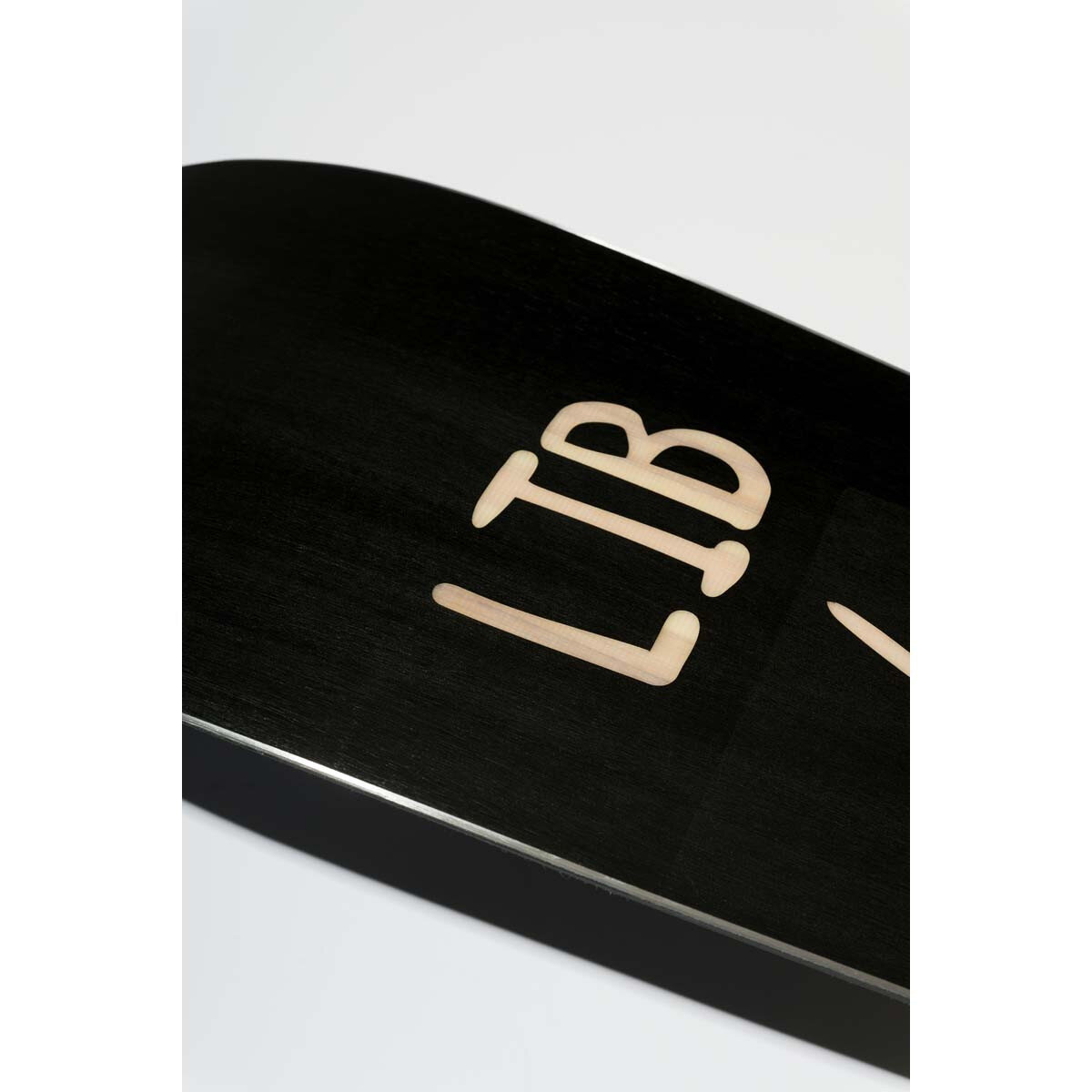

For a confident all-terrain rider who wants one board for the whole mountain
The Lib Rig is for someone who already edges confidently and wants the board to follow them everywhere: piste in the morning, trees and deep snow after lunch, natural jumps on the way. A flex of 7 and the camber call for a little speed and technique, so it is not a beginner's first board. Nor is it a board for park rails: there a true twin (identical nose and tail, rides the same in both directions) with a softer flex works better.
In our view the Lib Rig is one of the most sensible choices for "one board for everything" for a rider who prefers one direction, with enough technology that you will not outgrow it.
Size: 1-2 cm longer than your usual, from 55 kg up
Lib Tech advises the Lib Rig be 1-2 cm longer than your usual board: the board has slightly shifted volume (shorter and wider for the same volume) and a shortened contact length. The 2025/26 at our shop comes in 153 (from 55 kg), 157 and 159 (from 65 kg), 160W (from 65 kg, for a bigger boot) and 162 (from 70 kg). We also have a 156 from 2024/25. Enter your weight and boot size and we will show you which of the available sizes fits.
| Size | Contact length | Waist | Turn radius | Flex |
|---|---|---|---|---|
| 153 | 100 cm | 25.1 cm | 7.8 m | 7 |
| 157 | 105 cm | 25.5 cm | 8 m | 7 |
| 159 | 107 cm | 25.6 cm | 8 m | 7 |
| 160W | 107 cm | 26.5 cm | 8 m | 7 |
| 162 | 109 cm | 25.7 cm | 8 m | 7 |
-20%- Delivery in up to 2 days
- Shop at 6A Golo Bardo St., Sofia - since 1997
- Size advice:
+359 887 800 575
Lib Rig vs Jamie Lynn, Dynamo and Doughboy
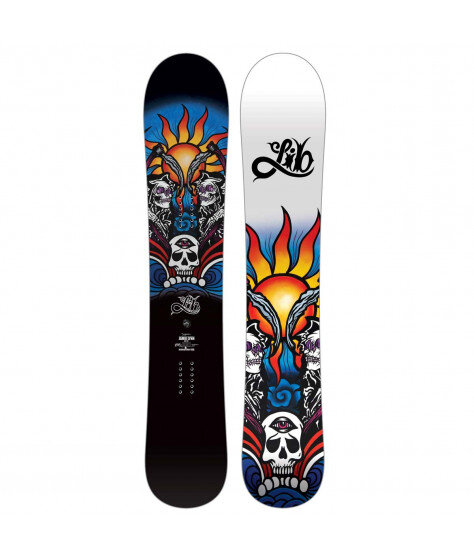
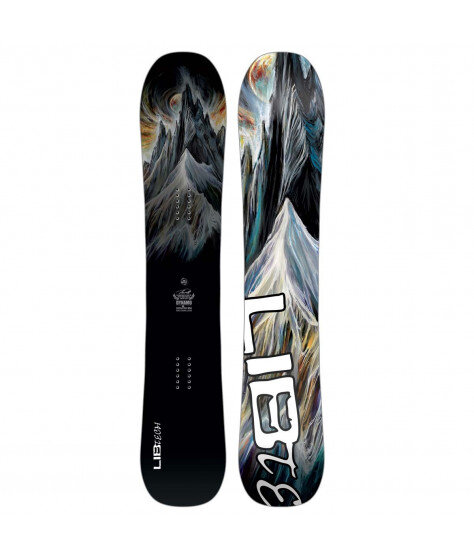
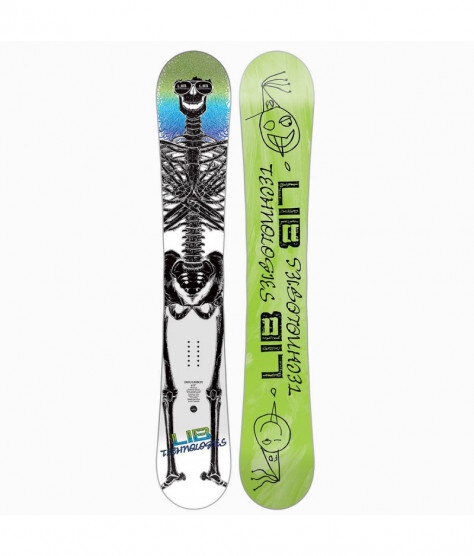
Lib Tech Jamie Lynn is the closest relative: also a directional camber with a 1.5" setback, but with a more classic camber feel and Jamie's artwork. Lib Tech Dynamo is the carving board with C3: predominant camber, directional, for speed and serious off-piste riding. Lib Tech Doughboy 195 is Mike Olson's ultimate camber idea; Austen Sweetin himself poses with it in Lib Tech's banner for 2024/25.
| Lib Rig 157 | Jamie Lynn 156 | Dynamo 156 | Doughboy 195 | |
|---|---|---|---|---|
| Profile | setback camber + early-rise nose | directional camber | C3 | traditional camber |
| Setback | 1.5" | 1.5" | 1" | 0 |
| Contact length | 105 cm | 112 cm | 111 cm | 152 cm |
| Flex | 7 | 7 | 6 | 7 |
| Terrain | piste, natural jumps, deep snow | all-mountain, carving | carving, off-piste | beat-up piste, deep snow |
Frequently asked questions
Is the Lib Rig a C3?
No. The current Lib Rig is a setback camber with an early-rise nose: Lib Tech calls it directional early-rise camber. There is no rocker between the feet.
Is the Lib Rig good for deep snow?
Yes. The early-rise nose goes in easily in soft and deep snow, and the camber is shifted back. Austen Sweetin made it exactly for groomed terrain and deep snow.
Which size should I take?
Lib Tech advises 1-2 cm longer than your usual, because the contact length is shortened. With a big boot, take the 160W.
What is the difference between 2024/25 and 2025/26?
The graphic. The profile, the slight taper, the 1.5" setback, the flex of 7 and the construction are the same, and the 2025/26 sizes are 153, 157, 159, 160W and 162.
Is it suitable for beginners?
Not as a first board. The camber and a flex of 7 call for a confident edge. The Lib Rig is the next step, and one you will not outgrow.
How to choose and where to see it
If you want a classic camber feel and art for the wall, the Jamie Lynn. If you want clean carving and speed, the Dynamo. If you want one directional camber board for the piste, natural jumps and deep snow, from someone who has ridden everything at Lib Tech, the Lib Rig. Come to our shop at Golo Bardo 6A in Sofia or call us at +359 887 800 575 and we will show you the board in person and pick the size together. We have been riding this stuff since 1997.
Comments : 0