



How to Choose a Snowboard: Profile, Flex, Length and Width

Every winter people in the shop ask the same thing: which board should I get. The answer is rarely a specific model. First you need four things: where you will ride, which profile suits you, how stiff the board should be and what length. Here we go through them one by one with the boards we have in stock from Lib Tech, GNU and KORUA.
First: where you will ride
This decides almost everything else. If you are mostly on groomed runs with the occasional park lap, you want a twin, a board that is the same front and back. It rides the same in both directions and forgives mistakes. In our catalog this is the "True Twin" feature.
If you want powder, long turns and speed, look at a directional board. The stance is set back, the nose is longer and wider, and the tail is shorter. The board floats up on deep snow by itself and stays stable at speed. In the specs this is "Dir".
In between are all-mountain boards. You can ride them anywhere without them being the best at any one thing. For most people who ride 10-15 days a season in Bansko or Pamporovo, this is the right choice.
Profile: camber, rocker and everything in between
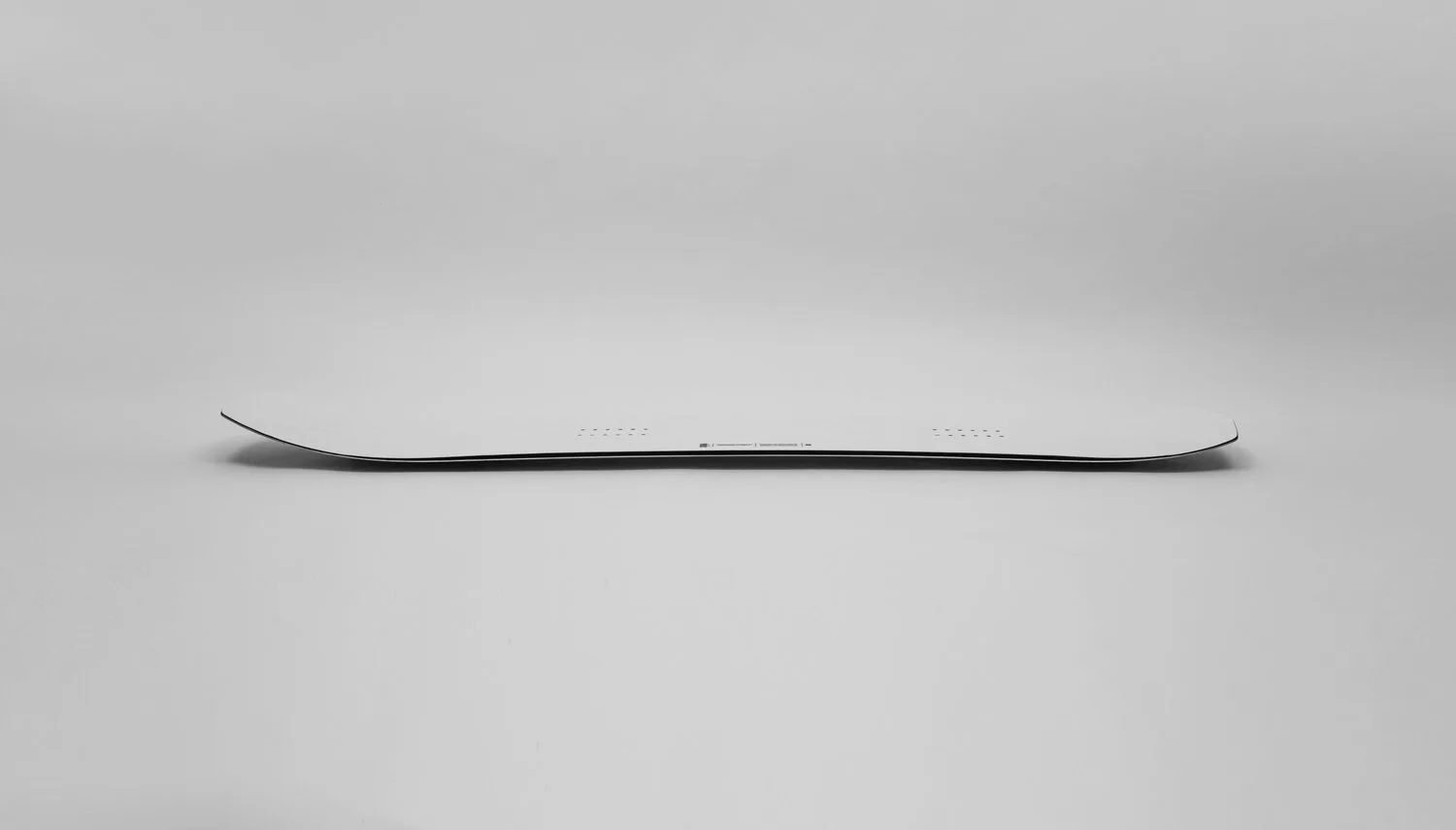
The profile is the shape of the board seen from the side when it lies on the floor.
Camber is the classic upward arch between your feet. When you step on it, the board presses with the whole edge. You get grip on hard snow, stability and more pop. It takes more technique, because the edge catches easily.
Rocker is the opposite: the board curves down between your feet, and the nose and tail are raised. It turns more easily, catches an edge less often and floats better in powder. On ice, though, it holds less well.
Hybrids combine the two. Lib Tech and GNU are made in the same factory in Washington state and use the same designations:
| Profile | What it is | Who it is for |
|---|---|---|
| C2 | Rocker between the feet, camber toward the nose and tail | Forgiving and grippy, for most riders |
| C2x | The same, but with more camber | More aggressive riding, more pop and grip |
| C2e | A softer version of C2 | Beginners and lighter riders |
| C3 | Camber | Carving, speed, jumps, for riders with good technique |
| BTX | Rocker (banana) between the feet | Park, playful riding, easy turning |
KORUA uses Float Camber. Under your feet it is camber, and toward the nose it turns into rocker. On the groomers it holds like a camber board, and in deep snow the nose lifts by itself so you do not have to lean back.
Flex: how stiff the board should be
Every board on the site lists a flex from 0 to 10. A soft board (4-5) turns easily, forgives mistakes and is pleasant in the park and for beginners. A medium one (6-7) is for most riders: it holds at speed and is still not tiring. A stiff one (8 and up) is for fast riding, big jumps and heavier riders.
If you are torn between two flexes, take the softer one. A stiff board that you cannot press rides worse than a soft one.
Length and width
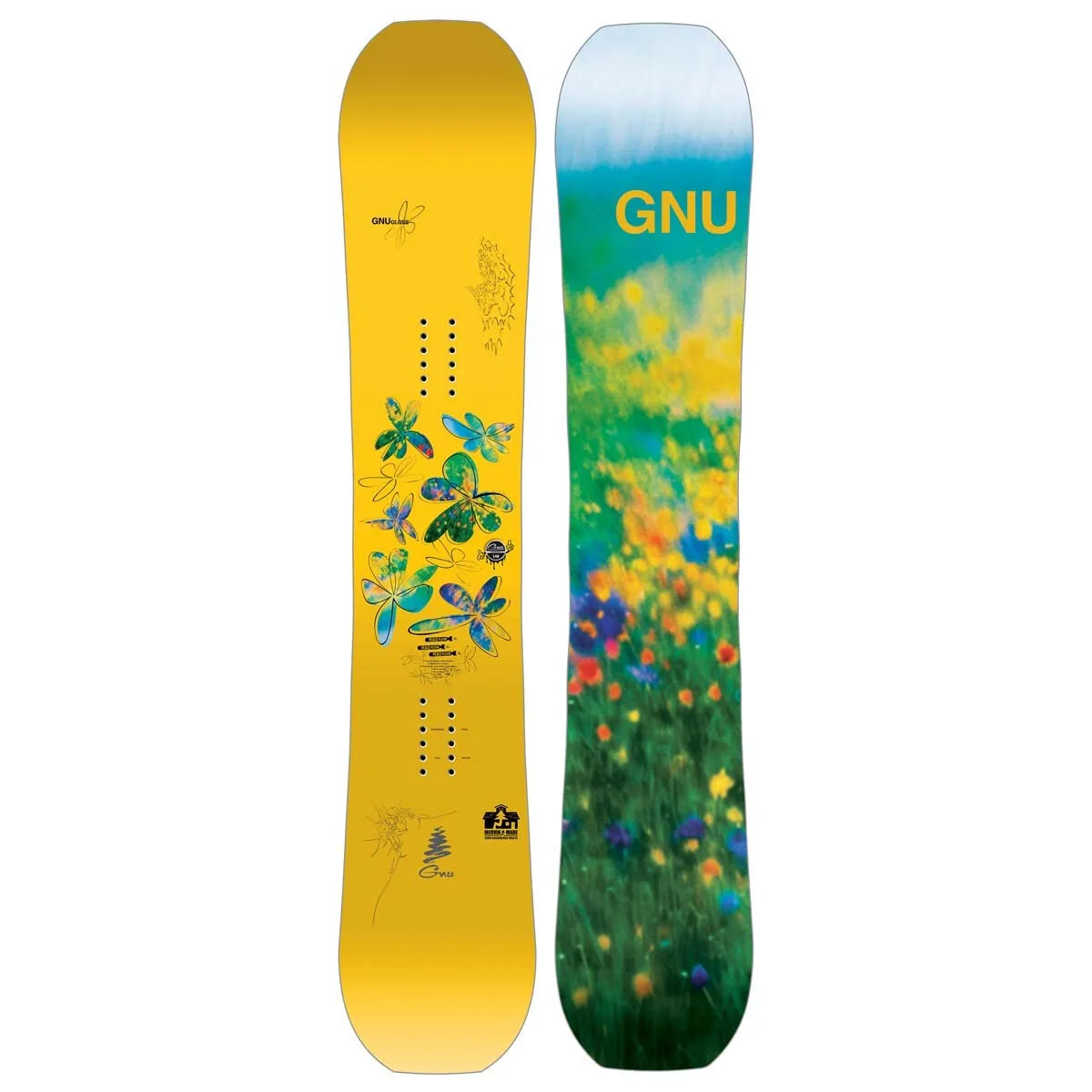
Length is chosen by weight, not height. The old "up to your chin" rule is only a guide. For park and beginners, take a shorter board, because it is lighter to turn. For powder and speed, a longer one. For every board the manufacturer gives a weight range for each size. If you are on the border between two sizes, your riding style decides.
Width matters more than it seems. If your boot is a size 44 (EU) or bigger, your toes and heels will hang over the edge of a standard board. In a turn they catch the snow and you fall for no reason. That is why there are wide models, marked W or Wide, for example the Lib Tech Ejack Knife 159W and the Lib Tech JL Wide 150. Bring your boots to the shop and we will put them on the board.
Lib Tech, GNU or KORUA
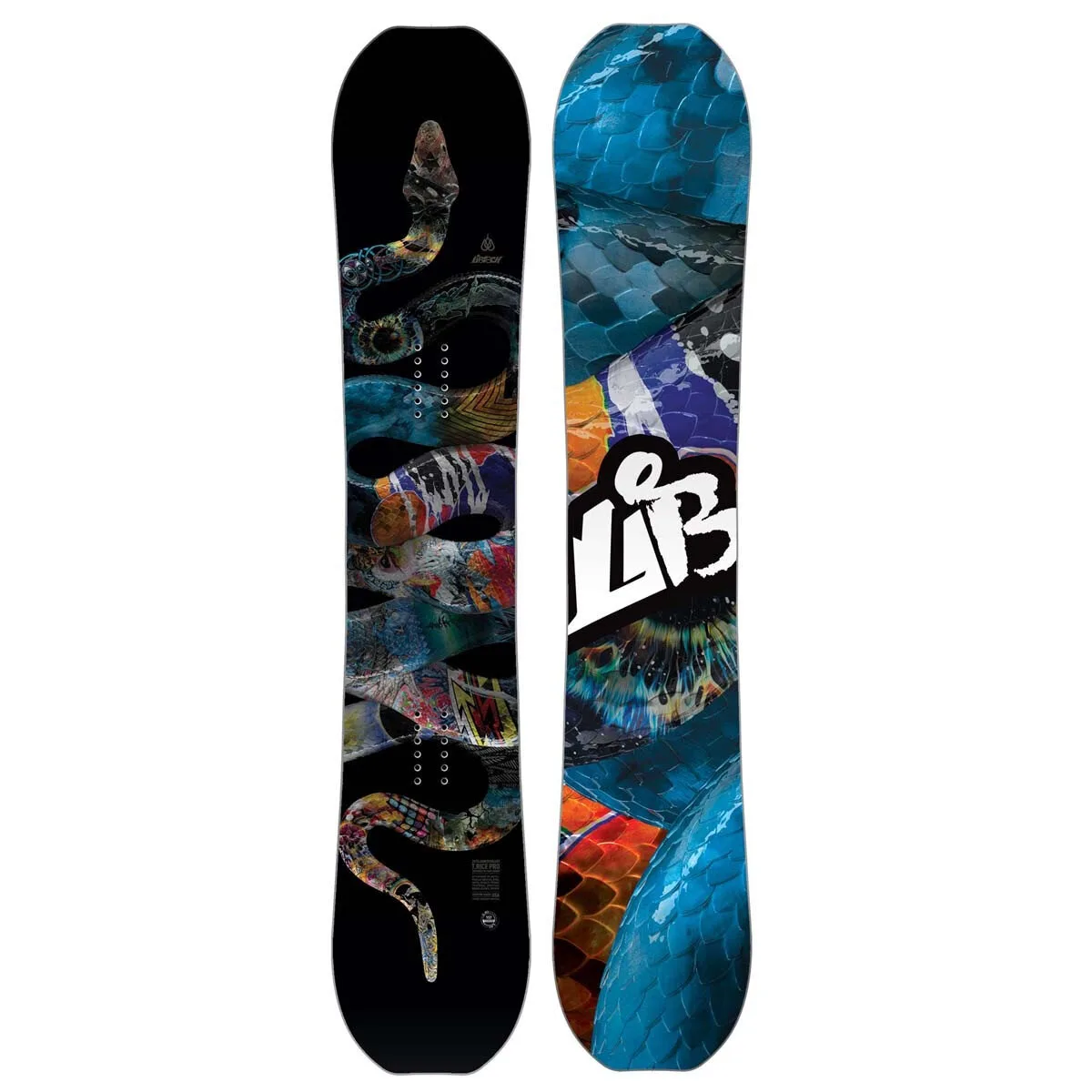
Lib Tech and GNU are sister brands from one factory and use identical profiles. The difference is in character. Lib Tech is more often for aggressive, technical riding. Many GNU models are asymmetric, with different toe and heel sides, because the body turns differently forward and backward.
Both brands use Magne-Traction, a wavy edge with several pressure points. On hard snow and ice it holds noticeably better than a straight edge. On Bulgarian slopes, which are often icy in the morning, that is a real advantage.

KORUA takes a different approach. Their boards are made for the turn: a taper toward the tail, setback and Float Camber. The KORUA Transition Finder is more playful, with a diamond tail, and works both on piste and in the backcountry. The KORUA Pensil has a light swallowtail and a pointed nose, for powder and long turns.
What we would pick
A first board or relaxed riding on piste. Soft to medium, C2 or BTX, twin. Of what we have, look at the GNU Velvet (women's, C2, flex 5) and the Lib Tech Glider 147 (women's, BTX). For kids we have the GNU Recess Package Mini 80.
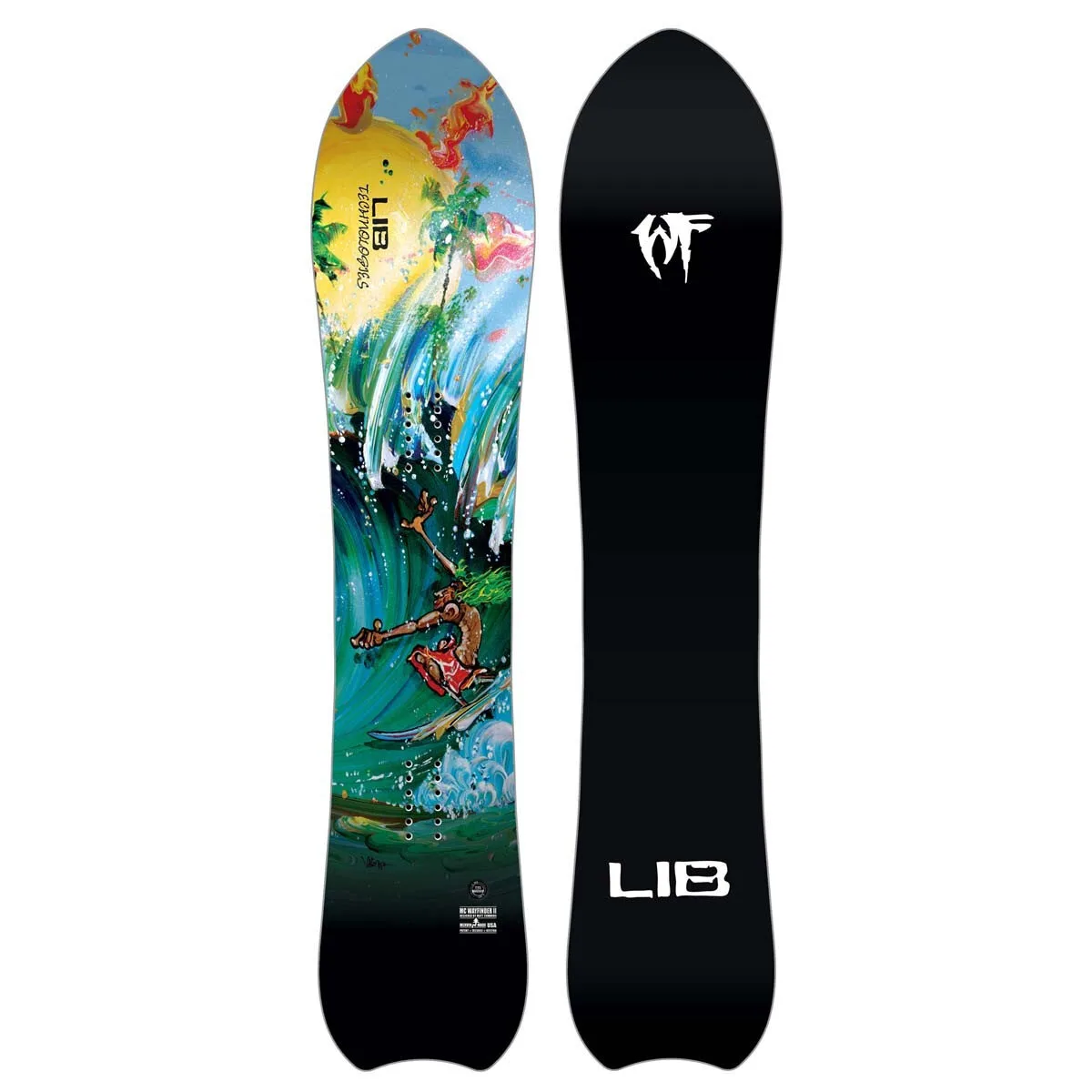
You ride the whole mountain and want one board for everything. Medium, hybrid, all-mountain: the Lib Tech MC Wayfinder III, the GNU Riders Choice, the GNU Headspace 158.
Carving and speed. Stiffer, directional, with more camber: the GNU Banked Country and the GNU Upgrade, which has a ¾" setback and a triple Magne-Traction edge.
Park. Soft, twin, rocker or C2: the Lib Tech Skate Banana is the classic here.

Frequently asked questions
Do you choose snowboard length by height or by weight?
By weight. The "up to your chin" rule is only a guide, and the manufacturer gives a weight range for each size. If you are on the border, take the shorter board for park and beginners, and the longer one for powder and speed.
What flex of snowboard is right for a beginner?
Soft, around 4-5 out of 10. A soft board turns easily and forgives mistakes. If you are torn between two flexes, take the softer one.
Do I need a wide snowboard with a size 44 boot?
Yes. With a size 44 boot and up, your toes and heels hang over the edge of a standard board and catch the snow in a turn. Look for models marked W or Wide, for example the Lib Tech Ejack Knife 159W.
What is the C2 profile at Lib Tech and GNU?
C2 is a hybrid: rocker between the feet and camber toward the nose and tail. It forgives mistakes and holds well on edge, which is why it is the profile for most riders. C2x has more camber, and C2e is a softer version.
What is the difference between Lib Tech and GNU?
They are sister brands from one factory in Washington state and use the same profiles and Magne-Traction edge. Lib Tech is more often for aggressive, technical riding. Many GNU models are asymmetric, with different toe and heel sides.
Not sure?
It is easiest in person. Come to the shop at Golo Bardo 6A in Sofia with your boots. Tell us how much you weigh, where you ride and what you do not like about your current board, and we will pull out two or three suitable ones for you to compare in your hands. If you cannot come, call +359 887 800 575 or write to us.
Comments : 0